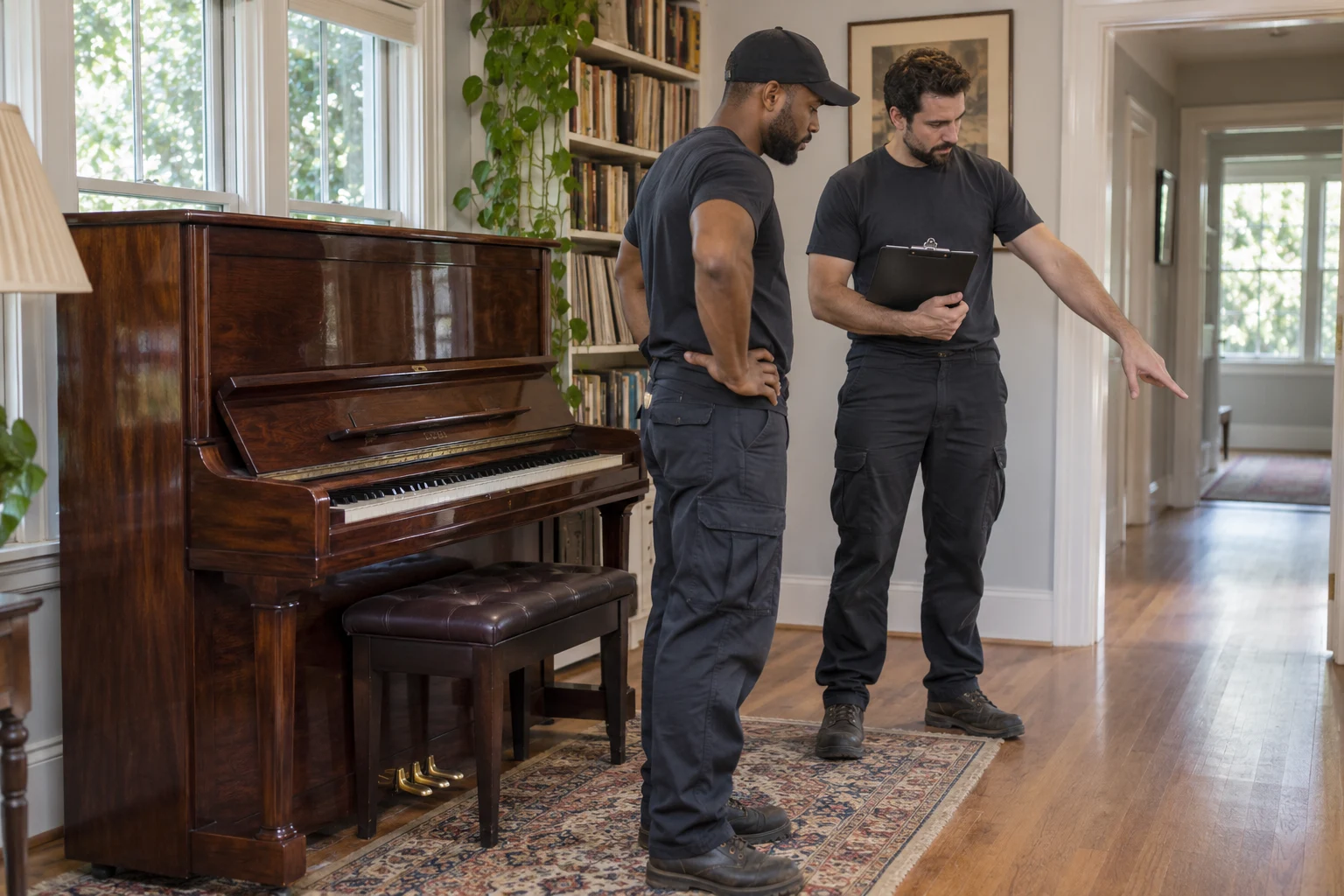
Pianos, pool tables, safes, hot tubs, and large appliances need an individual moving assessment. Their weight, construction, internal components, and access requirements can differ substantially from ordinary household furniture. Start by identifying the item accurately and describing the route at both properties. The provider should understand the job before deciding whether it can supply suitable people, equipment, and preparation.
This guide explains how to plan a specialty move without turning a difficult lift into an improvised household project. It focuses on the information to gather, questions to ask, and related services to coordinate. It does not replace the mover's assessment or the manufacturer's instructions. Your aim is to define the work clearly and give each part of it an appropriate owner.
Identify the item before requesting a quote
Record the manufacturer, model, dimensions, and weight if available from a reliable source such as the manufacturer. Do not estimate weight by appearance alone. Photograph the item from several angles and include its base, projecting components, and any existing damage. If you cannot find a specification, tell the provider rather than supplying a guessed figure as a fact.
Explain what makes the item unusual. A tall upright piano, a safe positioned in a basement, and an outdoor hot tub present different planning questions. Describe how the item entered the property if you know, but do not assume the same method is still available. Renovations, landscaping, replacement doors, or changes to access may affect the current route.
Map the complete route
Document the path from the item's starting position to a suitable loading location. Include doors, turns, stairs, landings, elevators, gates, slopes, and overhead restrictions. Repeat the process at the destination. Photographs and measurements help the provider understand the conditions, but a difficult job may need an in-person assessment before it can be accepted.
Ask the provider what information it needs and whether any uncertainty remains. A doorway measurement alone may not describe the room needed to turn or position equipment. Do not remove railings, doors, or structural elements without appropriate authorization and competent help. If the ordinary route is unsuitable, let qualified providers explain possible alternatives and the permissions they would require.
Choose help suited to the actual item
Ask whether the company regularly accepts the type of item you own and the access conditions involved. Request a description of its assessment and preparation process. A general offer to move heavy furniture does not explain whether the provider will handle a particular piano, safe, or pool table. The agreement should identify the actual item rather than using a broad category alone.
Our guide to choosing a moving company covers identity, written scope, and communication checks. Use those checks alongside the specialty discussion. Ask which business performs the work, whether subcontractors or separate technicians participate, and who coordinates them. You need a clear chain of responsibility when several people contribute to collection, transport, installation, and final setup.
Planning a piano move
Tell piano movers whether the instrument is upright, grand, baby grand, or another configuration identified by its maker. Provide dimensions, model details, and access information. Mention existing finish damage, loose parts, or concerns about the instrument's condition. Ask whether the company wants a separate technical review and what preparation it expects before collection.
Confirm who handles any approved disassembly, protection, transportation, positioning, and reassembly. Keep music, personal objects, and loose accessories separate unless the provider instructs otherwise. Ask an appropriate piano technician about servicing or tuning after relocation and follow the instrument maker's guidance. A transportation booking should not be assumed to include technical work on the instrument itself.
Understand piano moving cost factors
A useful piano moving cost request describes the instrument and route, not simply the distance between addresses. Stairs, restricted turns, loading access, and the required service method can affect the proposal. Ask what the estimate assumes and what information remains to be confirmed. If the provider needs a site visit, complete that assessment before treating the price as settled.
Use our moving costs and quotes guide to compare the full scope. Identify transportation, preparation, specialist handling, and any separate technical services. Do not compare a ground-floor transfer with a proposal involving difficult stairs as if both were identical jobs. The meaningful comparison is between providers assessing the same instrument under the same conditions.
Planning a pool table move
Give the provider the table's manufacturer, dimensions, and construction details when known. Explain whether accessories, lighting, or other equipment also need to move. Ask which parts of the table require professional disassembly and what the provider includes at delivery. Do not assume the table can be carried intact or that moving labor includes complete setup.
Confirm who handles reassembly, leveling, and any agreed work on the playing surface. If the table has existing wear or damage, document it and ask whether moving affects a planned repair. Prepare the destination room before delivery, including space for normal play and access. The objective is a usable setup in the intended location, with each required service specifically assigned.
Planning a safe move
Provide the safe's model, dimensions, verified weight when available, and current position. Tell the provider about stairs, narrow access, and any known anchoring. Ask who is responsible for assessing removal from the existing installation and placement at the destination. If anchoring or structural concerns are involved, clarify which appropriately qualified professional will assess and perform that work.
Remove personal valuables and sensitive contents according to a plan agreed with the provider. Keep keys, combinations, and access information under your control. Do not publish those details in photographs or routine booking messages. Avoid assuming that several strong people can substitute for an appropriate assessment and handling method. The provider needs to accept the specific safe and route before work begins.

Planning an appliance move
Identify the appliance and provide its model and dimensions. Ask the mover which preparation is required and consult the manufacturer's instructions. Gas, water, electrical, and other connections may need a qualified technician. Decide who will arrange disconnection, preparation, reconnection, and testing. A crew that transports an appliance may not be the business authorized or equipped to install it.
Keep any manufacturer-specified transport components or instructions available, and tell the provider if they are missing. Clean and dry the appliance as appropriate to the preparation guidance. Do not rely on a generic waiting period or setup instruction for every model. Ask the manufacturer or qualified technician about the correct steps before using the appliance at its new location.
Planning a hot tub move
Describe the hot tub's model, dimensions, installation, and access around it. Provide photos of gates, decking, landscaping, and the proposed destination. Ask the provider which site conditions it needs to inspect. A clear outdoor area beside the tub does not necessarily establish a workable transport route through a garden, side passage, or restricted driveway.
Arrange draining, electrical isolation, and other preparation with suitable professionals following manufacturer guidance. Ask who handles any reconnection and commissioning at the destination. Confirm that the new site is ready before transport is booked. Avoid dismantling surrounds or making structural changes based on assumptions about how the tub will be moved. Let the assessed method guide the preparation.
Separate technical work from transportation
Make a list of every task required before pickup and after delivery. Distinguish transport from appliance connections, instrument servicing, table setup, anchoring, or other specialist work. Assign each task to a named provider and confirm the sequence. The mover should not arrive to find that an item remains connected or inaccessible because another appointment was never arranged.
Our local movers and moving labor guide explains how responsibilities can be divided among providers. Apply the same approach here, with particular attention to handoffs. Ask how a delayed technician or unfinished site preparation affects the moving booking. Keeping those dependencies visible gives you a chance to resolve them before people and equipment arrive.
Document condition and service terms
Photograph the item and record existing marks, worn areas, or functional concerns before the move. Ask the provider how it documents condition and how you can retain that record. For items with technical components, distinguish an appearance check from an appropriate functional inspection. A moving crew may not be qualified to diagnose every internal issue before or after transportation.
Request the written protection terms and ask how they apply to the specific item and service stages. Clarify any declared-value requirements, exclusions, or separately supplied insurance. Ask whom to contact about a concern and which records the process requires. Do not assume that a general statement about coverage explains the treatment of every high-value or specialist object.
Coordinate storage carefully
If the item cannot go directly to its destination, discuss storage before accepting the plan. Ask whether the provider accepts it for storage, what environment is available, and how handling into and out of the facility works. Share any relevant manufacturer guidance or specialist requirements. Ordinary household storage should not be assumed suitable for every instrument, material, or appliance.
Read our moving and storage guide for timing and access questions. Keep technical instructions and essential components accessible rather than placing the only copy inside a stored shipment. If another specialist will prepare the item for redelivery, arrange that handoff explicitly. Storage adds a stage to the plan and should have its own understood responsibilities.
Prepare the working area
Clear unrelated belongings from the assessed route and keep children, pets, and visitors away from the work. Reserve approved parking and access if required. Give the crew accurate information about any condition that changed after the survey. Wet surfaces, new obstacles, unfinished construction, or unavailable elevators can affect the method the provider previously assessed.
Do not join a difficult lift or improvise equipment to keep the appointment moving. Let the provider reassess if conditions no longer match the plan. If work must pause, ask what needs to change and how the next step will be arranged. A clear decision about unsuitable conditions is more useful than pressure to complete a method the crew no longer considers appropriate.
## Build a sequence everyone can follow
A specialty move may depend on several appointments. An appliance technician might prepare the item before collection, a moving crew might transport it, and another professional might complete installation afterward. Put those stages in order and give each provider the information needed for its own part. Confirm that the destination is ready before arranging the final stage.
Ask what happens if a prerequisite is incomplete. If the item remains connected, access is obstructed, or the receiving area is unfinished, the mover may need to change the appointment. Understand the provider's process for reporting that problem and agreeing on the next step.
Keep one person responsible for coordination, even when different businesses perform the work. That person should retain the accepted scopes, contact details, and current schedule. They should also pass along material changes promptly rather than assuming the providers will discover them from each other.
After delivery, check that any remaining technical work is still booked and that the item is left in the condition required for that work. A completed transport stage does not necessarily mean the item is ready for normal use. Confirm that distinction with the relevant provider and retain any instructions supplied for the next appointment.
Plan the destination handoff
Have the receiving area ready and the final position agreed before delivery. Provide the receiving contact with the item details, room plan, and names of any technicians due afterward. Confirm which setup tasks the mover will complete and which remain separate. Keep access available until all agreed handling is finished rather than scheduling another obstruction into the same space.
Check condition on arrival and follow the provider's process for recording a concern. Arrange any model-specific inspection, setup, or servicing before normal use where appropriate. For an ordinary furniture job, our furniture and small moves guide may be sufficient. For a specialty item, accurate identification, a complete route assessment, and clearly assigned technical work remain the foundation of the plan.