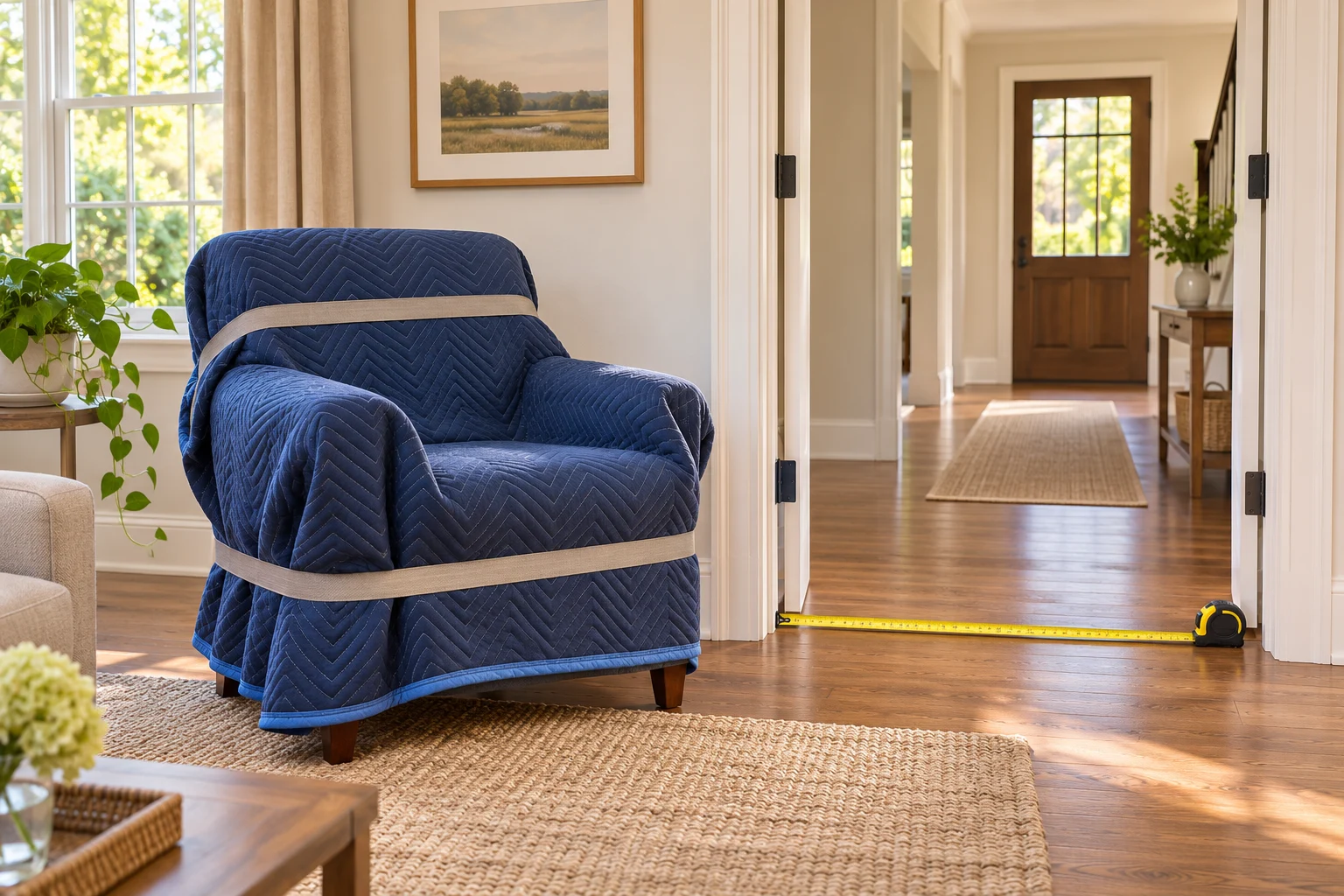
A small move can require careful planning even when it involves only one piece of furniture. A sofa may fit comfortably in a living room but fail to clear the turn outside an apartment door. A dining table may need disassembly, protective wrapping, and coordinated access at two buildings. The number of items alone does not describe the work.
Furniture movers and single item movers should receive the same essential information as a company handling a larger household shipment: what is moving, its condition, its dimensions, the access route, and the services required. This guide explains how to prepare a furniture or small move, compare proposals, and organize the handoff so each person understands the job before lifting begins.
Describe every item clearly
List the furniture by type and include approximate dimensions. Mention the material, construction, and any removable sections. A solid-wood cabinet, a flat-pack wardrobe, and a glass display unit present different questions even when their overall dimensions are similar. Provide photographs showing the full item and any features that may affect handling, such as projecting arms, loose trim, or a delicate base.
Tell the mover about existing marks, previous repairs, weak joints, and components that are already loose. If you know the manufacturer or model, share that information when it helps identify assembly instructions or handling constraints. Do not guess about weight or construction. Explain what you know and let the provider ask for the additional information it needs to assess the piece.
Measure the route as well as the furniture
Check the openings and turns between the item and the likely loading location. Consider doors, corridors, stair landings, elevators, gates, and low overhead features. Record clear measurements in a form the mover can understand. A doorway's nominal size may not describe the usable opening when the door, handle, or surrounding wall limits the route.
Repeat the process at the destination. If you are buying furniture from another person, ask for access information at the pickup address rather than focusing only on how it will fit your home. Share photos of difficult corners and ask the mover to assess them. Measurements support planning, but they do not replace a professional judgment about a challenging handling route.
Check whether the piece fits its destination
Measure the intended room and consider how the furniture will be used once placed. Leave space for doors, drawers, seating, and normal movement through the room. A large desk that clears the entrance may still block a wardrobe or leave too little space for a chair. Decide the intended position before the delivery crew arrives.
For a sofa or sectional, include all parts in the plan and explain any connection system you know about. For a bed, account for the frame, headboard, mattress, and any storage components. If you are uncertain about the layout, resolve it before booking where possible. Moving a heavy piece between rooms repeatedly can add work and may be outside the original scope.
Choose the service you actually need
Some jobs require transportation and handling at both ends. Others need labor within the same home, loading into a rental vehicle, or unloading from a container. Ask the provider which tasks it accepts and what equipment it supplies. The phrase furniture moving service should lead to a written description of the job rather than an assumption that every related task is included.
Our local movers and moving labor guide explains how to assign responsibility when you provide the vehicle. For a small shipment traveling farther away, ask about the provider's transportation arrangement and timing. Do not assume a single-item booking means a direct trip or immediate delivery. Confirm the actual service method and receiving requirements before deciding whether it fits.
Understand minimum bookings and separate charges
Ask how the provider prices a small move and whether a minimum applies. Find out whether the proposal includes travel, loading, unloading, materials, stairs, and assembly. A one-item move still requires scheduling, people, and equipment, so the cost may not scale directly with the number of pieces. Compare complete proposals rather than dividing the total by the furniture count.
The moving costs and quotes guide shows how to keep those categories visible. If one offer includes wrapping and another assumes you supply protection, ask for clarification before treating the totals as comparable. Keep unresolved questions marked clearly. A low headline figure is not useful until you know what work and conditions support it.
Coordinate collection with the person releasing the item
For furniture bought secondhand or collected from another property, agree on who will be present and who has authority to release it. Confirm that payment and collection arrangements between buyer and seller are settled separately from the moving booking. Give the mover accurate contact details and a defined pickup location. Avoid expecting the crew to resolve a purchase disagreement on arrival.
Ask the releasing person to clear access and remove belongings from the furniture before collection. Explain any building reservation or parking permission needed. If the item will be dismantled, decide who approves that work and who retains the hardware. Keep the mover informed of changes to the pickup time, address, or item so the booking remains accurate.
Agree on disassembly before moving day
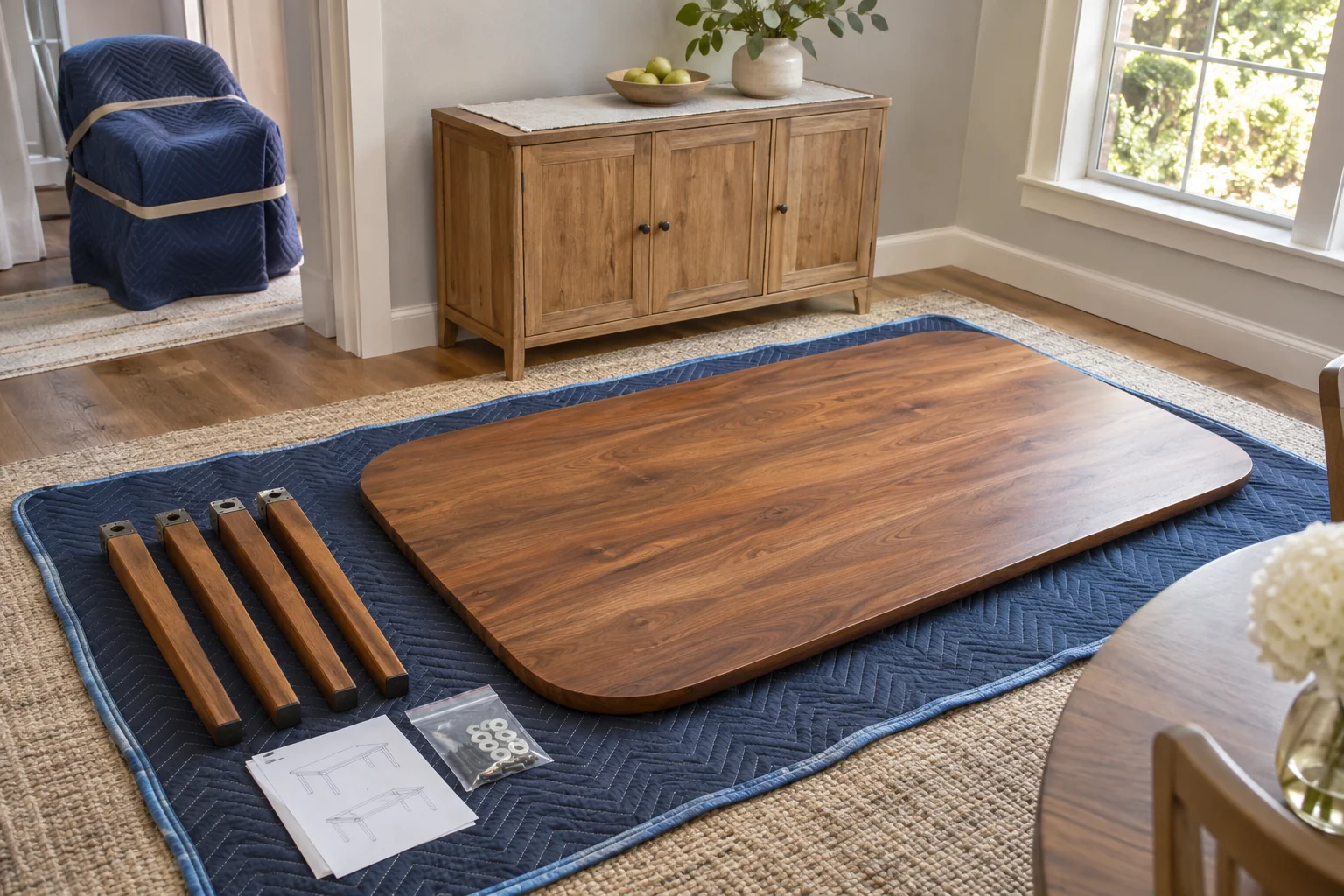
Tell the provider which parts can be removed and whether you have instructions. Ask who handles disassembly and what reassembly is included at delivery. Some furniture may have concealed fasteners, fragile fittings, or construction that does not tolerate repeated dismantling. Do not assume a crew can safely separate a piece merely because it appears to have been assembled from panels.
Identify wall attachments and other fixed connections early. Ask whether removal falls within the provider's service and whether another professional is required. Keep hardware in labeled packets linked to the correct item, following the mover's agreed process. If you prepare the piece yourself, photograph the sequence and store useful instructions somewhere accessible at the destination.
Plan suitable furniture protection
Ask the provider what protective materials it will use for the item's surfaces and construction. Explain concerns about delicate finishes, glass, upholstery, or exposed edges. Do not apply adhesives directly to a finish without appropriate guidance. Protective wrapping should suit the material and the expected handling rather than simply making the item look covered.
Our packing services guide discusses preparation for fragile household goods. Ask whether glass shelves, removable doors, or decorative components should travel separately and who will prepare them. Empty furniture as instructed by the mover. Small loose objects left inside a cabinet can create a handling problem and may not be visible until the piece is already moving.
Recognize when the job needs a specialist
An upright piano, large safe, pool table, or unusually heavy appliance should not be treated as ordinary furniture without the provider's assessment. Describe the item explicitly and request acceptance. Its weight distribution, internal components, or setup requirements may change the equipment and skill needed. The provider should know about it before sending a crew.
Read the specialty item moving guide if your piece falls into that category. Avoid trying to make a challenging item fit a standard booking by describing it vaguely. A specialist assessment may identify additional preparation, a different route, or a separate service. Those decisions are easier to make before the item is surrounded by packed boxes and a waiting vehicle.
Prepare the building access
Ask both properties about loading rules, elevator bookings, permitted hours, and any documentation requested from the mover. Confirm the person who approves the arrangements. Even a short appointment may need a reservation if it uses a service elevator or loading dock. Keep the written instructions available and send relevant details to the provider before arrival.
Check the approved vehicle location and the walking route from that point. Do not assume a driver can stop wherever the furniture is easiest to carry. If access is shared with residents or businesses, discuss how the route will remain usable. Tell the mover about narrow entryways, gates, and surfaces that need special consideration so its plan reflects the actual setting.
Arrange timing around both ends
Choose a pickup and delivery arrangement that the releasing and receiving contacts can support. Ask what the booking window means and how the provider will notify you of changes. If the move depends on a seller's limited availability, explain that before accepting the service. A time constraint matters only if the provider has agreed that it can work within it.
For a longer route, use our long-distance moving guide to coordinate the period between collection and arrival. Ask what happens if the destination is unavailable and whether storage would involve separate terms. Keep the main contact reachable and provide a backup if appropriate. A small shipment still needs a clear plan when the schedule changes.
Record condition and understand responsibility
Take clear photographs before the furniture is released and note visible marks or weak points. Share relevant concerns with the provider rather than keeping them only in a private file. Ask what condition record the company uses and how you can retain a copy. A useful description identifies the specific part of the item, not simply a general statement that it is used.
Ask which terms apply to loss or damage and how a concern should be reported. If several businesses participate, clarify their roles. Our guide to choosing a moving company explains identity and service checks. Keep your booking records, condition photos, and correspondence together so you can discuss the actual item and agreement if a question arises after delivery.
Make the collection area ready
Clear the route and remove loose objects from the surrounding space. Keep children and pets away from the working area. Make sure the crew can inspect the furniture before carrying begins. If the piece contains drawers, shelves, or other removable parts, follow the agreed preparation instructions. Do not attempt last-minute heavy lifting to speed up the appointment.
Walk through the plan with the crew leader and point out anything that changed since booking. If a route appears unsuitable, allow the provider to reassess the job. Do not force a piece through a tight opening or encourage an improvised lift because the appointment is short. A paused decision is easier to resolve than damage caused by an unsuitable handling method.
## Make a simple handoff record
For a single-item collection, write a short record identifying the piece, pickup contact, destination contact, access instructions, and agreed service. Include photographs and the accepted estimate. Share the relevant parts with the people involved, while keeping payment details and private information limited to those who need them. This prevents the seller, mover, and receiver from relying on different versions of the plan.
For example, a dining table collected from a seller may need its legs removed before leaving an apartment. Confirm who performs that task, how the hardware travels, and whether reassembly is included at delivery. Ask the receiving contact to have the intended space clear. Those details are more useful than describing the booking simply as one table.
If the seller changes the item, collection address, or availability, tell the mover before the appointment. Obtain confirmation that the revised job is accepted. Small changes can affect the plan when access or timing is already tight. Keep the current instructions available until the delivery is fully completed.
Complete the delivery with a final check
Have the destination position ready before unloading begins. Once the piece is placed and any agreed assembly is complete, check its condition and confirm that the task matches the booking. Ask about any concern while details are fresh and follow the provider's reporting process. Retain the receipt and final records with your photographs and service agreement.
A well-planned small move relies on accurate information rather than the size of the shipment. Measure the item and access, define the tasks, coordinate both contacts, and confirm suitable protection. Those steps give furniture movers a clear job to assess and help you receive the piece in the right room with the agreed work completed.