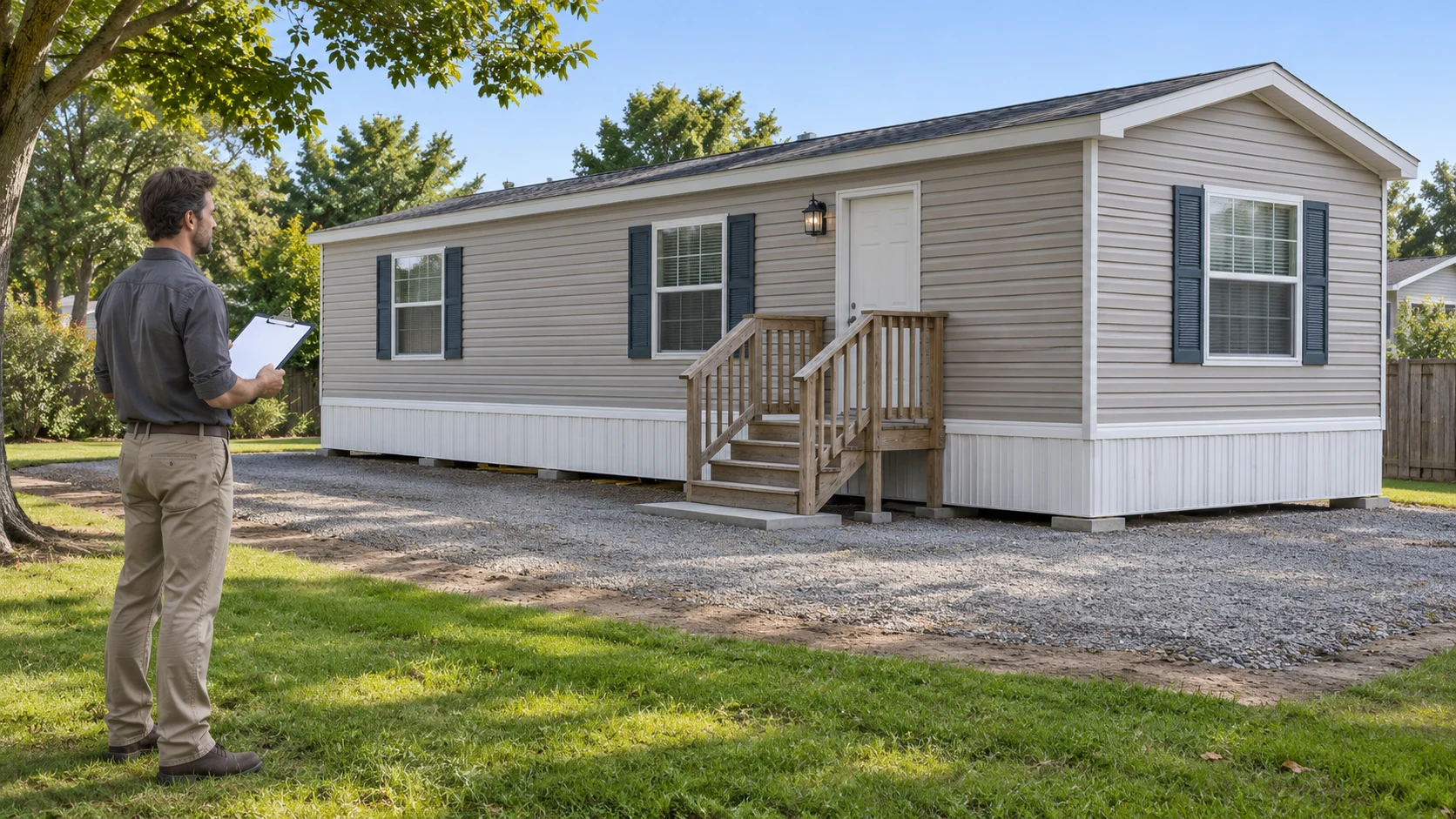
Moving a mobile or manufactured home is a site and transport project, not a household furniture booking. The structure must be assessed, the receiving property must be suitable, and the work at both sites must connect with an accepted transport plan. Start with the home's identity and the proposed destination. Do not book a departure date before the professionals involved have explained the dependencies.
People use mobile home movers to describe several kinds of work. This guide concerns relocating a transportable manufactured dwelling, not carrying belongings out of it and not relocating a conventional house on a new foundation. If you mean moving a site-built structure, read the structural house moving guide. The distinction matters when describing the job and finding the appropriate expertise.
Identify the home and collect its records
Gather the manufacturer's name, model, age, dimensions, and available identification records. Keep installation manuals, previous inspection reports, repair records, and photographs together. If records are missing, explain that immediately and ask the assessor how the home can be identified. Do not substitute a remembered sales description for information needed to evaluate the actual structure and its current installation.
Document additions or changes since the home was originally installed. Porches, decks, attached rooms, roofing changes, and utility arrangements may require individual review. The professionals assessing the move need to understand what belongs to the original dwelling and what was added later. Tell them about water damage, settlement, previous transport, or known structural concerns rather than waiting for those conditions to emerge during preparation.
Establish whether relocation is feasible
Ask a suitably qualified specialist to assess the home in its present condition. The assessment should address the actual structure, existing supports, access, and proposed scope. A home that was transported once is not automatically ready for another journey. Avoid relying on photographs alone if the provider says an inspection is necessary to determine what work it can accept.
Separate an initial opinion from a confirmed plan. Ask what remains unknown, which additional professionals may be needed, and what information could change the recommendation. Record those questions before making irreversible preparations. A useful feasibility discussion identifies the next decision and its prerequisites instead of offering an unsupported guarantee that the home can reach any available parcel.
Confirm the receiving site can accept the home
Before transport is arranged, discuss the destination with the authorities and qualified professionals responsible for site approval and installation. Ask about the dwelling's placement, access, intended use, and applicable site requirements. Supply the home's identification and dimensions. A property listing or an owner's permission alone does not explain every condition that may apply to placing a dwelling there.
HUD's manufactured housing homeowner resources advise checking the authorities responsible for transport and zoning when relocating a manufactured home. Use that guidance to identify the appropriate local contacts for your project. Requirements depend on the location and circumstances, so obtain answers for the actual origin, route, and receiving site rather than borrowing another household's permit list.
Assign site preparation to named providers
Ask who will assess and prepare the destination support system, drainage, access, and service connections. Confirm which drawings or manufacturer instructions the installation team needs. Keep the transport provider informed about the site preparation sequence. The transporter should not arrive expecting a ready location while the receiving contractor is still waiting for another inspection or approval.
Agree on how site readiness will be confirmed. Identify the person authorized to say that the home can be delivered and what evidence supports that decision. If preparation falls behind, tell the coordinator promptly. A changed receiving date can affect transport scheduling, origin access, utility work, and temporary accommodation, so the consequence extends beyond the unfinished site task itself.
Understand transport and installation roles
Ask which business handles preparation for transport, which handles the road journey, and which handles installation at the destination. One company may arrange several stages, but the written agreement should still identify the responsibilities. Confirm the legal identity of each participating business and retain the contact information. Do not assume an advertisement for home moving explains every subcontracted role.
HUD explains that installation oversight may involve HUD or a qualifying state program. Confirm the installer credentials required for your destination through the relevant authority. Ask how the provider will follow the applicable manufacturer instructions and installation requirements. This is a project-specific check, not a reason to assume that any contractor described as licensed is qualified for every stage in every state.
Give the transporter accurate route information
Provide the origin and destination addresses and describe access from public roads onto each property. Mention gates, trees, overhead features, tight turns, slopes, and any known restrictions. Ask the transporter what route assessment it performs and who coordinates required approvals. Do not try to decide the suitability of a road from an ordinary passenger-car navigation route.
Keep route planning with the qualified transport team and responsible authorities. If escorts, utility coordination, temporary access changes, or other arrangements are proposed, ask who obtains approval and performs the work. Request the sequence and associated scope in writing. Never remove a public obstruction, alter utility infrastructure, or direct traffic on the assumption that doing so will keep the project on schedule.

Make the origin preparation explicit
Walk through the current site with the providers responsible for preparation. Identify attached structures, access obstacles, stored belongings, and utility connections. Ask which elements must be removed or prepared and who is qualified to do each task. Record whether debris removal, site cleanup, and restoration are included or require separate arrangements after the dwelling leaves.
Do not disconnect utilities or remove structural components simply because transport has been booked. Follow the sequence agreed by the qualified providers. Keep occupants, children, and pets away from work zones and arrange access for the professionals involved. If preparation exposes an unexpected condition, pause the relevant decision and ask how it changes the assessed plan before further work proceeds.
Plan household belongings separately
Ask the transport and installation team what may remain inside and how accepted contents must be prepared. Do not assume a dwelling's contents can travel as though the structure were a packed moving truck. Record the provider's instructions and identify belongings that need a separate household move. Keep essential documents, medication, valuables, and daily necessities accessible throughout the project.
For belongings traveling separately, use the residential moving guide to define packing and transport help. If there is a gap between vacating and occupying the dwelling, review moving and storage options. Those are related bookings, but they have different inventories and responsibilities from the work of transporting and installing the home itself.
Compare proposals by stage
Ask each provider to identify assessment, preparation, transport, permits or coordination, destination installation, utility-related work, inspections, and cleanup within its proposal. Mark excluded work clearly. One quote may cover only the journey while another includes preparation and setup. Comparing the totals without those boundaries can create a misleading picture of the project budget.
Our moving costs and quotes guide provides a general method for tracking confirmed amounts and unresolved allowances. Apply that method to each project stage rather than treating a preliminary transport price as the entire cost. Ask how changed conditions are assessed, who authorizes additional work, and when updated documents will be provided.
Build a schedule around dependencies
Create a sequence showing site approval, assessment, preparation, utility appointments, transport readiness, destination readiness, delivery, installation, and required final checks. The actual order should come from the professionals responsible for the project. Put names and contact details beside the stages. A date without an owner does not establish that the prerequisite work has been arranged.
Ask which dates are confirmed and which depend on other tasks or conditions. Avoid scheduling household travel and accommodation around a preliminary target presented as a fixed completion date. Keep a practical backup plan for where occupants will stay if the project changes. Review that plan whenever the critical path changes rather than after the expected departure or arrival has already passed.
Ask about responsibility across the project
Request the written terms covering the home during preparation, transportation, installation, and any interim holding arrangement. Ask each provider how damage or incomplete work should be documented and reported. Clarify how existing conditions are recorded. If several businesses participate, understand which business answers questions about each stage and how a concern crossing those boundaries is coordinated.
Retain dated photographs, reports, accepted scopes, approvals, invoices, and correspondence in an accessible project folder. Our guide to choosing movers explains general identity and communication checks that also help when assessing contractors. Do not assume those household-moving checks replace the additional qualifications and project approvals needed for relocating a dwelling.
Keep one current project record
Choose a primary coordinator who can keep the providers working from the same information. That person should record changes to the home's condition, site readiness, route, and schedule. Send material updates to everyone affected through the agreed channel. When a contractor revises a stage, ask which later appointments need to change rather than expecting other providers to infer the consequences.
Use clear version dates on plans and schedules. Remove superseded instructions from the active work folder while retaining them in the project history. If an approval has conditions, keep those conditions beside the relevant task. The useful record is the one people can consult during the next decision, not a collection of messages scattered across several household members' phones.
## Use a readiness meeting before transport
Arrange a final planning discussion with the coordinator and the providers whose work determines whether transport can proceed. The purpose is to check the project against the current facts, not simply repeat the intended date. Confirm the home's assessed condition, origin preparation, approved route arrangements, destination readiness, installation availability, and the household's accommodation plan.
Ask each responsible provider to identify unfinished prerequisites and the point at which it will confirm completion. If one task depends on another inspection or appointment, keep that dependency visible. Do not replace an unanswered question with an assumption that someone else will handle it. A short list of unresolved decisions is more useful than a schedule that looks complete but lacks acceptance from the people doing the work.
For example, the receiving site may appear ready while the installation contractor still needs a particular record or approval. The practical response is to identify that requirement, assign the next action, and confirm how the transport date is affected. It is not to ask the transporter to arrive regardless and expect the site team to solve the problem under pressure.
Keep a dated record of the meeting and circulate relevant decisions to the participating providers. Confirm who can authorize a changed plan and which changes require another assessment. Include the latest origin and destination contacts so a routine question does not become a missed handoff.
Afterward, update the household arrangements separately. If the expected vacancy or occupancy period changes, revise lodging, personal travel, belongings storage, and essential supplies. The dwelling project and the household relocation are connected, but each needs its own complete record and responsible contacts. Confirm the final readiness decision through the agreed channel, and keep the people responsible for transport, installation, and receiving informed of the same accepted date and any conditions that still apply to delivery.
Confirm readiness before occupancy
Ask the installation team and relevant authorities which completion documents, inspections, and service checks apply before the home is occupied. Have appropriately qualified providers complete the work assigned to them. Confirm unresolved items and the process for follow-up. Do not interpret physical arrival at the site as proof that installation and all occupancy requirements have been satisfied.
Finally, reconcile the project record with the work completed and retain the documents for future maintenance or questions. A manufactured-home relocation connects a structure, a road journey, and a new installation. Its planning should connect those stages just as clearly: assess first, confirm the receiving site, assign qualified providers, and keep household arrangements separate until the home is ready for use.