Shipping furniture over a long distance requires a plan for preparation, collection, transport, and receiving. A single piece may be too awkward for ordinary parcel handling while still being much smaller than a full household move. Start by identifying the item and deciding where service should begin and end. Collection from inside a home differs from handing over a prepared package at an accessible loading point.
A furniture shipping company needs accurate dimensions, construction details, access information, and a clear description of the tasks you expect. This guide focuses on long-distance single-piece shipments, including furniture bought from a seller or sent to another household. It explains how to compare service methods without assuming every provider handles packing, lifting, and final placement in the same way.
Decide what the shipment contains
List each piece and all related components. A dining table shipment might include legs, leaves, fasteners, and a separate glass cover. A bed might include a headboard, frame sections, slats, and hardware. Describe the complete shipment so the provider can assess both preparation and tracking. Do not assume a furniture count communicates the number of packages involved.
Provide the material, dimensions, and available weight information. Tell the company when a figure is approximate or unknown. Share photographs showing construction, finish, projecting parts, and existing condition. If the furniture can be dismantled, explain what you know without promising that disassembly is suitable. The provider may need instructions or a separate assessment before accepting that work.
Choose the handoff points
Ask precisely where collection happens and where delivery ends. Does the service start inside the room, at the entrance, or at another agreed loading point? Does delivery include carrying the piece into the home, placing it in a room, or only reaching an accessible location? These distinctions can change whether you need separate moving labor at either end.
Our furniture and small moves guide addresses access and local handling. Combine that planning with the long-distance transport proposal. If a freight service expects the shipment already prepared for collection, identify who will prepare and position it. Do not discover that responsibility only when a driver arrives without a crew for moving an unpacked cabinet.
Understand the proposed transport method
Ask the provider how the shipment will travel and whether it will be handled or transferred between stages. Request a plain explanation of the service rather than inferring the method from a truck photograph. A piece traveling with other goods may have different scheduling and preparation needs from a dedicated move arranged specifically for that item.
Discuss which parts of the method remain subject to operational arrangements and which commitments are written into the booking. You need enough information to plan preparation and receiving without expecting a route or vehicle that was never promised. Keep the transport description with the accepted proposal so any later change can be discussed against a clear reference.
Define packing and packaging
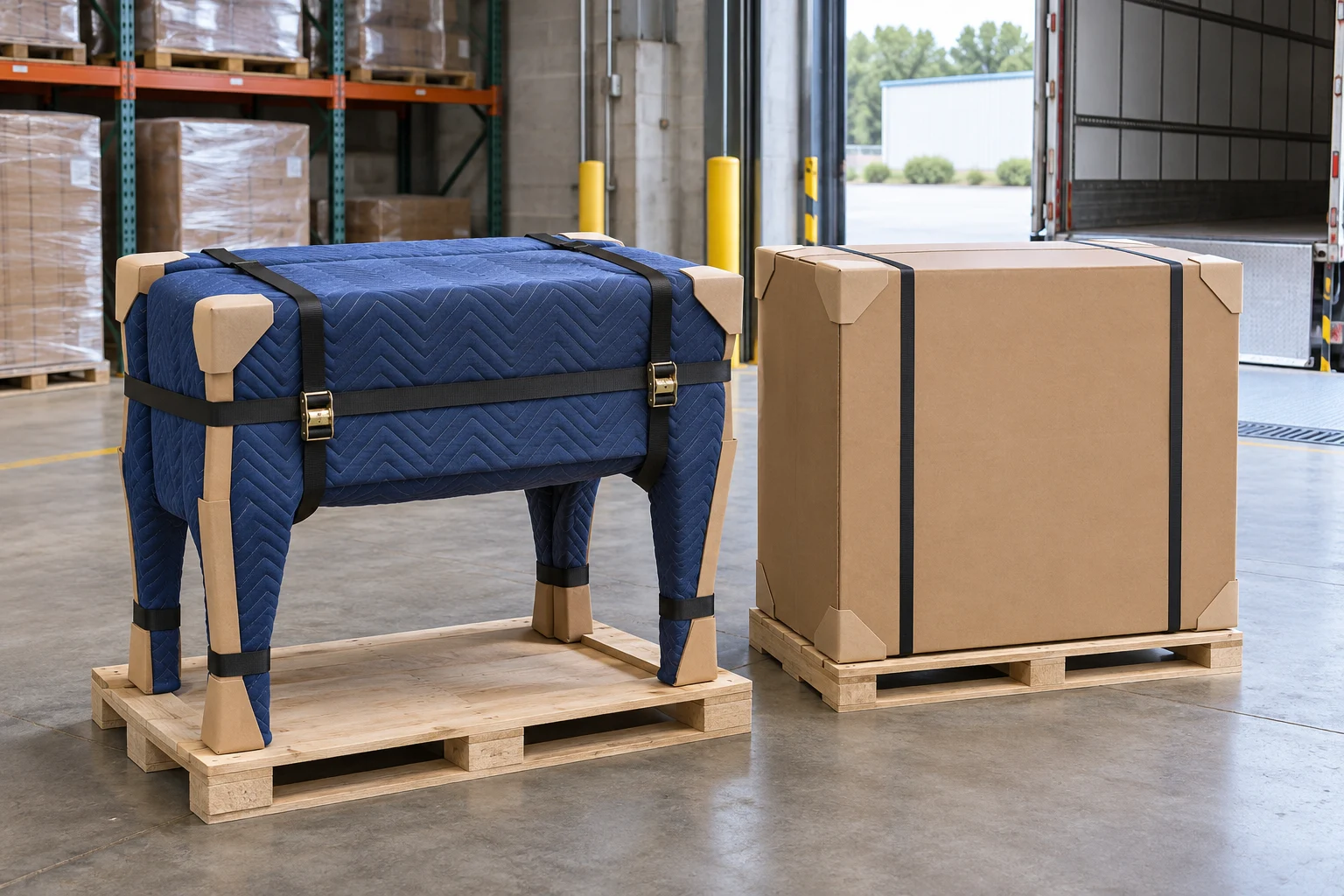
Ask who supplies protective preparation and what the provider requires for the item and transport method. Materials suitable for carrying furniture directly between rooms may not describe preparation for a longer shipping sequence. Do not assume wrapping the visible surface completes the packaging task. Corners, components, unsupported areas, and the shape of the piece may require individual consideration.
Read our packing services guide when deciding which work to hire separately. If another business builds packaging or prepares the shipment, coordinate its specifications with the transporter. Obtain acceptance of the prepared form before collection. You want the person packing the furniture and the business carrying it to work from compatible requirements.
Ask about crates, pallets, and prepared units
Some transport arrangements may require a crate, pallet, or another prepared shipping unit. Ask whether that applies to your booking and who designs, supplies, and secures it. Do not improvise technical packaging based on an online example when the carrier has its own acceptance requirements. Give the packaging provider accurate item details and the proposed service specifications.
Confirm the final packaged dimensions and weight when those figures become available. A quote based on the bare furniture may need review after protective packaging is added. Ask how revisions are documented and whether collection equipment or destination access depends on the packaged form. Include the removal of packaging at delivery in the scope if you need that assistance.
Coordinate with a seller or sending household
Name the person authorized to release the piece and give the mover their contact details. Settle purchase and ownership arrangements separately from transport. Confirm that the item shown in the booking is the one available for collection. A driver or moving crew should not be expected to negotiate a sale or decide whether a buyer accepts the furniture's condition.
Ask the sender to prepare access and complete the tasks assigned to them before collection. If the provider will pack or dismantle the furniture, make sure the sender knows what will happen and permits the agreed work. Keep a record of photographs and item details shared between parties. A clear sending contact is particularly useful when you cannot attend pickup yourself.
Describe collection and delivery access
Provide stairs, elevators, doorways, corridors, parking restrictions, and the route from vehicle access to the piece. Include the receiving property just as carefully. Ask whether the provider needs a survey or additional photographs. A shipment can fit the vehicle while still requiring a different plan for the last turn into a room.
Check reservations and loading rules with each property manager. If a destination has limited receiving hours, disclose them before booking. Our apartment moving guide covers shared-building considerations. Do not assume a carrier will wait through an unavailable elevator or return without a separate arrangement. Ask how missed or restricted access is handled under the service terms.

Compare the complete shipping price
Ask for a proposal based on the same item, packaging, access, dates, and handoff points. Identify preparation, collection, transport, destination handling, assembly, and packaging removal separately. If a business excludes a task, keep it visible in your budget rather than assuming it costs nothing. Separate invoices still contribute to the overall cost of receiving the furniture.
Use the moving costs and quotes guide to organize the comparison. Ask when payment is due, what the cancellation terms cover, and how a changed packaged size or access condition would affect the agreement. Avoid comparing a room-placement service with a transport-only price as if the proposals represented identical work.
Keep timing realistic and explicit
Discuss collection and delivery separately. Ask what each window means, how notice is given, and how schedule changes are communicated. A sender's availability, transport schedule, and destination receiving hours all need to fit together. Do not interpret a broad estimated period as a promise of delivery on its first day.
Our long-distance moving guide explains planning around a shipment's arrival. For a single piece, the same principle applies: someone must be available to receive what was booked. If you cannot attend, give an authorized contact the item record, placement instructions, and a way to reach you. Confirm any authorization requirements with the provider beforehand.
Document condition before release
Take clear photographs of the furniture and record existing damage or repairs. Ask the provider how condition is recorded at collection and retain the documentation. When packaging hides the surface, coordinate photographs before it is closed. Keep the relationship between the item and its packages clear so the receiving person can identify the complete shipment.
For interstate household moving services, the FMCSA preparation resources can help you understand relevant consumer information. Ask the provider to explain the service classification and terms that apply to your particular arrangement. Different shipping models should not be assumed to carry identical responsibilities merely because each transports a piece of household furniture.
Review protection and reporting terms
Request the written terms addressing loss, damage, and responsibility for preparation. Ask whether owner-packed or separately packed goods are treated differently and whether declarations or additional arrangements are needed. Keep the explanation with the accepted booking. The word insured does not by itself explain the amount, exclusions, or procedure applying to your item.
Ask how to document a concern at delivery and how to submit any subsequent report. Give the receiving contact those instructions in advance. Avoid relying on their memory of a telephone conversation when they may be opening unfamiliar packaging. Specific condition records and accessible terms support a clearer discussion if something needs attention.
Prepare for components and assembly
Identify every removable component and decide how it will be labeled. Keep fasteners associated with the correct piece and retain useful instructions. Ask whether assembly is included and what the provider will do if fittings are damaged or missing. A shipment delivered in components may still require a separate appointment before it is usable.
Do not assume transport includes wall attachment, electrical work, or other installation. Our white glove moving guide explains how to define placement and setup tasks. Decide what finish you need at the destination and obtain acceptance of that scope. This is especially important when the recipient expects ready-to-use furniture rather than a protected package.
Plan for storage or an unavailable recipient
Ask what happens if delivery cannot be completed as expected. Clarify notice, temporary holding, redelivery, and the responsibilities for arranging them. If you know the destination will be unavailable for a period, include that fact before collection. Do not assume a vehicle can hold the shipment until a convenient day without a defined agreement.
The moving and storage guide covers access and timing questions for a longer gap. For furniture shipping, also ask whether the packaging is intended for the expected holding conditions and duration. Share relevant care requirements with the provider rather than assuming any storage space suits the material and finish.
## Make the package record usable at both ends
For a shipment prepared in several packages, create a record linking each package to the furniture it belongs to. A tabletop, legs, leaves, and hardware may need separate identification even though the purchase is described as one table. Give the sender and recipient the same reference so they can check whether the complete set has been released and received.
Keep the record factual and avoid assuming that package appearance reveals its contents. State what the person preparing the shipment actually placed inside, and retain relevant photographs before packaging closes. If a packing provider supplies its own list, ask how your record should align with it. Resolve inconsistent descriptions before collection.
The recipient should know which packages to retain unopened for an assembly appointment and which can be inspected through the agreed receiving process. If the service includes unpacking, explain who checks the components before materials leave the property. Small fittings can be difficult to locate once packing paper and cartons are mixed together.
Keep technical instructions separate from the only package containing the furniture. A digital or accessible paper copy can support receiving without requiring an early opening that conflicts with the agreed service. This is particularly useful when the buyer, sender, carrier, and assembler are different people. A shared package record gives each handoff a concrete reference. When a component changes after packing, update the list and tell the receiving contact. They should know the current package count and any remaining questions before the shipment arrives, especially when another person will complete the assembly.
Receive and reconcile the shipment
Have the destination route and intended position ready. Check package counts and inspect the item through the agreed process. Keep photographs and records of specific concerns and contact the responsible provider as instructed. Confirm that accepted assembly, placement, and material-removal tasks are complete. Retain useful packaging until you understand whether it is needed for a remaining question.
A long-distance furniture shipment is a sequence of responsibilities, even when only one piece travels. Define the handoff points, preparation, transport method, access, and destination tasks before booking. Those details let you compare realistic proposals and give the sender, carrier, and recipient a shared understanding of what will happen from collection through final placement.