
A long-distance move works best when transportation, housing, packing, and personal travel follow one coordinated plan. The distance matters, but the handoffs often require more attention. Someone must release the old home, someone must receive the shipment, and your household needs essentials during the days in between. Start by deciding which dates are firm and which parts of the schedule can move.
People search for long distance moving companies, interstate movers, cross country movers, and state to state movers for similar reasons. They need help sending household belongings to a home that is too far away for a simple afternoon trip. This guide focuses on planning that job, comparing suitable services, and preparing for the period between pickup and delivery.
Describe the move before requesting estimates
Write down the origin and destination addresses, your preferred pickup period, and the earliest date you can receive belongings. If the destination address is not final, explain what you know and when you expect confirmation. Include the size and type of home, storage areas, and larger items. A complete description is more useful than a bedroom count alone.
Separate firm deadlines from preferences. A lease ending on a particular day is different from hoping to arrive before a weekend. Tell prospective movers about both, but identify which constraint cannot change. If a work start date or school schedule affects your personal travel, record that as well. Transportation plans should account for your real circumstances rather than an assumed schedule.
Choose the level of service
Long-distance moving services can involve different combinations of packing, loading, transportation, unloading, and storage. Decide which responsibilities you want to retain. You might pack most belongings yourself and hire the transportation and lifting. You might prefer a company to pack fragile rooms. Another household may need temporary storage while waiting for its new home to become available.
Compare the complete arrangement rather than the vehicle alone. A container can offer a different loading schedule from a staffed household move, but you still need a plan for lifting, access, and receiving it. Our moving and storage guide explains those decisions. If you want help preparing boxes, review the packing services guide before you request estimates.
Build an inventory that can be checked
List furniture by room and estimate the boxes you expect to pack. Include outdoor belongings, shelving, exercise equipment, and possessions stored away from the main residence. Photograph larger pieces and note anything that requires special handling. You can update the list as you sort, but give each revision a date so everyone knows which version is current.
Use the inventory to decide what deserves space in the shipment. Consider the condition, usefulness, dimensions, and personal value of each item. A large piece that will not fit the new home creates work at both ends. Avoid discarding useful belongings only because they are inexpensive, but compare the practical effort of moving them with the effort of replacing them later.
Confirm who arranges and performs the move
Ask for the legal identity of the company taking your booking and the company expected to transport the shipment. If a broker is involved, ask how the carrier will be identified and how you will receive its details. Keep the names with your moving records. You should know who handles booking questions and who provides transportation updates.
FMCSA provides interstate moving preparation resources and explains the documents consumers should receive before an interstate household move. Use those resources while checking the businesses involved. For a broader hiring process, read our guide to choosing a moving company. Confirm the actual participants rather than relying only on the brand shown in an advertisement.
Make access part of the estimate
Explain the route between each home and a suitable parking location. Include stairs, elevators, gates, shared driveways, restricted streets, and loading docks. A long-distance shipment still has to move through the last doorway and down the final hallway. Accurate access information helps the company assess the equipment and arrangements the job may require.
Ask the destination building about loading reservations before you settle the plan. Find out who approves access and whether a delivery window can be accommodated. If the truck cannot park close to the residence, ask the mover to explain the possible arrangements and associated charges. Record the answer rather than assuming the same loading method will work at both homes.
Understand pickup and delivery separately
Ask what the pickup commitment covers and what the delivery commitment covers. Request a clear explanation of any date range, notification process, or scheduling condition. Do not translate a broad delivery period into a personal promise of arrival on its first day. Use the terms in the written agreement when planning lodging and access to the new home.
Discuss what happens if your housing timeline changes. A delayed closing, unfinished repair, or unavailable elevator can prevent receipt even when transportation is proceeding as planned. Ask how changes should be reported and whether storage or another delivery arrangement would require additional services. Identify the decision point early so you are not improvising after the truck reaches the destination area.
Keep a separate travel budget
The transportation estimate is only one part of a cross-country move. Your household may also need fuel, meals, lodging, transportation for pets, cleaning supplies, and temporary household basics. Create a separate budget for these expenses. Keeping them visible prevents a moving quote from appearing to represent the full cost of relocating your family.
Read our moving costs and quotes guide for a practical comparison method. Include expenses that depend on timing, such as extra nights away from your new home. You do not need to predict every purchase, but you should understand which costs continue while you wait. Keep a reserve based on your own constraints rather than a generic percentage presented as a universal rule.
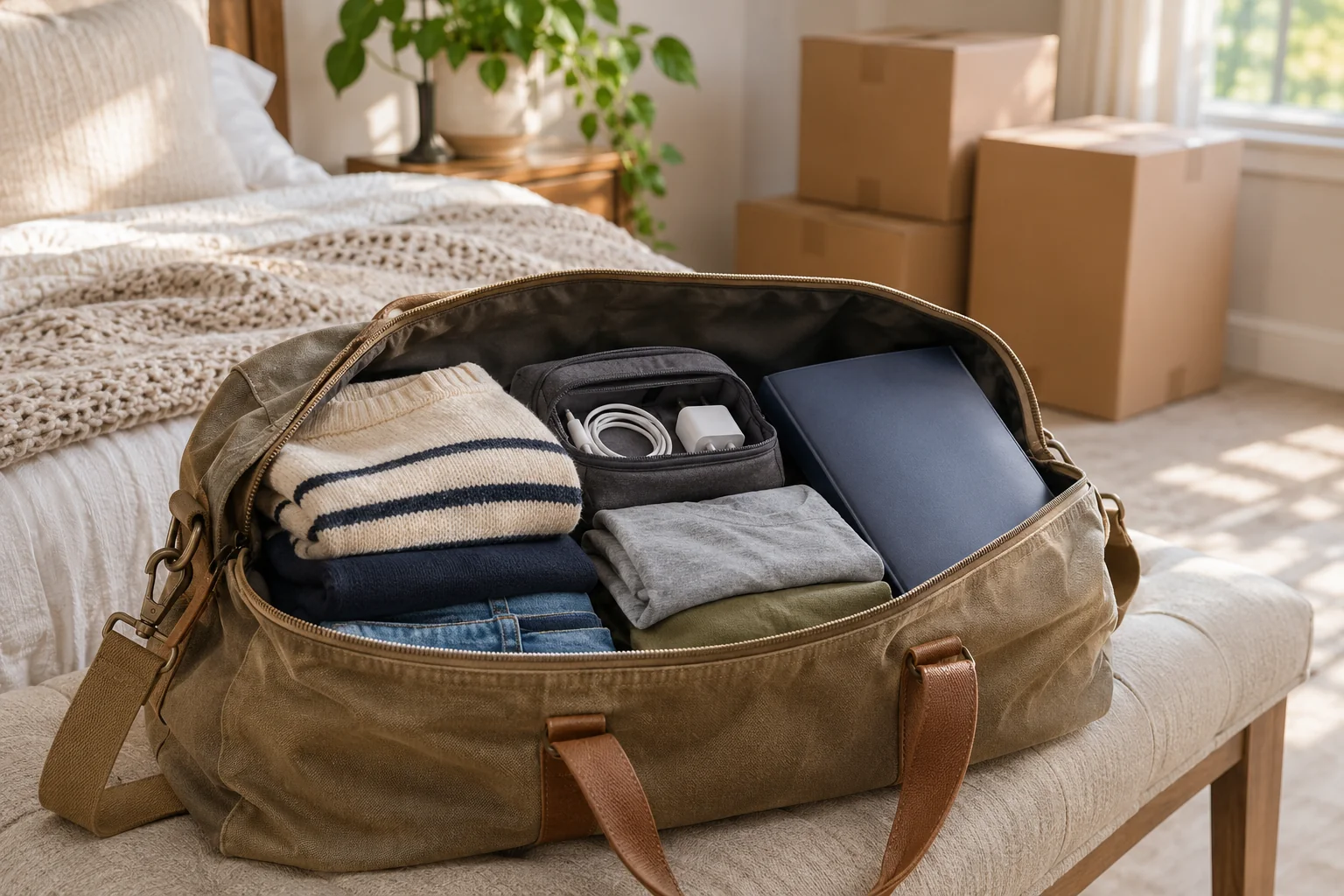
Pack for a longer period without your shipment
Prepare belongings you will carry separately before the main packing begins. Include identification, keys, essential medication, chargers, work materials, and documents you may need during travel. Add clothing and personal items suitable for the expected gap before delivery. Consider access to laundry and the weather at the destination rather than packing only for the day you leave.
Keep sentimental or irreplaceable small items with you when practical. Ask the mover what it will not accept, and follow the provider's written instructions for restricted materials. Do not assume an item is suitable for shipment because it fits in a box. Household chemicals, certain batteries, food, and other goods may require separate decisions based on the service and item involved.
Organize boxes for receiving, not just loading
Give each room a consistent name and number the boxes if you want a simple tracking system. Mark the intended destination clearly. A box labeled for an upstairs office should be distinguishable from one needed immediately in the kitchen. Keep an accessible list of essential cartons so you can identify them without opening an entire room of boxes.
Avoid writing sensitive details on the outside of a box. You can describe contents in your private inventory while using a general room label on the carton. Keep furniture hardware in labeled packets and document which piece each packet belongs to. Agree with the mover on how hardware will travel, especially if the company is handling disassembly and reassembly.
Plan for vehicles, pets, and personal travel
Do not assume household transportation includes a car or that every mover arranges vehicle shipping. Confirm the scope if a vehicle must travel separately. Coordinate pickup and delivery with the days you need access to it. Remove personal belongings and follow the vehicle transporter's instructions if you arrange that service through a separate agreement.
Plan pet travel independently of the furniture shipment. Think about lodging, breaks, secure carriers, and access to the new home. Keep pets away from busy loading areas and arrange supervision when doors will remain open. If a family member needs a quieter space or accessible facilities during travel, build those requirements into the itinerary before booking nonrefundable arrangements.
Prepare the old home for pickup
Finish the tasks assigned to you before the crew arrives. Keep exits clear, remove loose obstacles, and separate items that should remain. Make sure the inventory reflects your final decisions. If packing is incomplete or the shipment has grown, tell the company before moving day so it can explain any effect on the plan.
Walk through the home with the crew leader before loading begins. Point out fragile pieces, existing marks, and anything with unusual handling instructions. Stay available to answer questions. Before departure, check closets, cabinets, storage rooms, and outdoor spaces with your list. Keep the paperwork and contact information with your travel belongings rather than sending them away inside the shipment.
Stay reachable while belongings are traveling
Choose a primary telephone number and provide a backup contact if needed. Tell the mover when you expect to be unreachable during a flight or drive. Ask which updates you should expect and whom to contact if the destination schedule changes. A clear communication arrangement reduces the chance that a routine question becomes a missed delivery instruction.
Keep messages and revised instructions together. When a delivery detail changes, confirm the new address, access arrangements, and contact person in writing. If someone else will receive the shipment, ask the company what authorization it needs. Give that person the inventory, room plan, and instructions they need to make decisions without guessing about your preferences.
Receive the shipment with a room plan
Before delivery, make the new home easy to navigate. Clear entrances, identify rooms, and decide where larger furniture should go. Measure any uncertain spaces before a heavy piece reaches the doorway. If the residence is still being painted or repaired, coordinate which rooms are available. A simple plan helps the crew place belongings where you can use them.
Check belongings as they arrive and record concerns with specific descriptions. Keep relevant documents and photographs together, and ask the company how to report an issue through its stated process. Open essential boxes first and test the basic setup of each room. Leave time to assess the move after unloading rather than scheduling every remaining task for the same evening.
## Prepare a delivery decision sheet
Create one accessible page for the person receiving the shipment. Include the destination address, approved loading position, building contact, room names, and the mover's contact information. Add instructions for belongings that need particular placement or assembly. Keep the sheet concise enough to use while answering questions at the door.
If you will receive the shipment yourself, the same record can still help. Travel, temporary accommodation, and last-minute housing tasks can make familiar details difficult to recall. A written reference keeps the delivery arrangement separate from the many other decisions competing for your attention.
Give a substitute receiver clear limits. Explain which placement decisions they can make, how to reach you, and what to do if the shipment arrives while part of the home is inaccessible. Confirm any required authorization with the mover beforehand.
Update the sheet when an access detail changes, and discard outdated copies. A single current version helps everyone work from the same instructions during the final handoff. Keep a copy available even if your phone loses its internet connection.
Give the first week a practical order
Set up sleeping, bathing, food preparation, and work needs before unpacking decorative items. Break down empty cartons without blocking exits or shared areas. Follow the destination's rules for recycling and packing material disposal. If unpacking or carton removal is part of your agreement, confirm when it will happen and what you need to prepare.
Keep the moving records until outstanding questions are resolved. Review the inventory against any boxes that remain unopened, and keep receipts for separate relocation expenses. A long-distance move finishes through a sequence of handoffs rather than one arrival moment. A current inventory, accessible essentials, and clear contact arrangements make each handoff easier to manage from pickup through the first settled week.