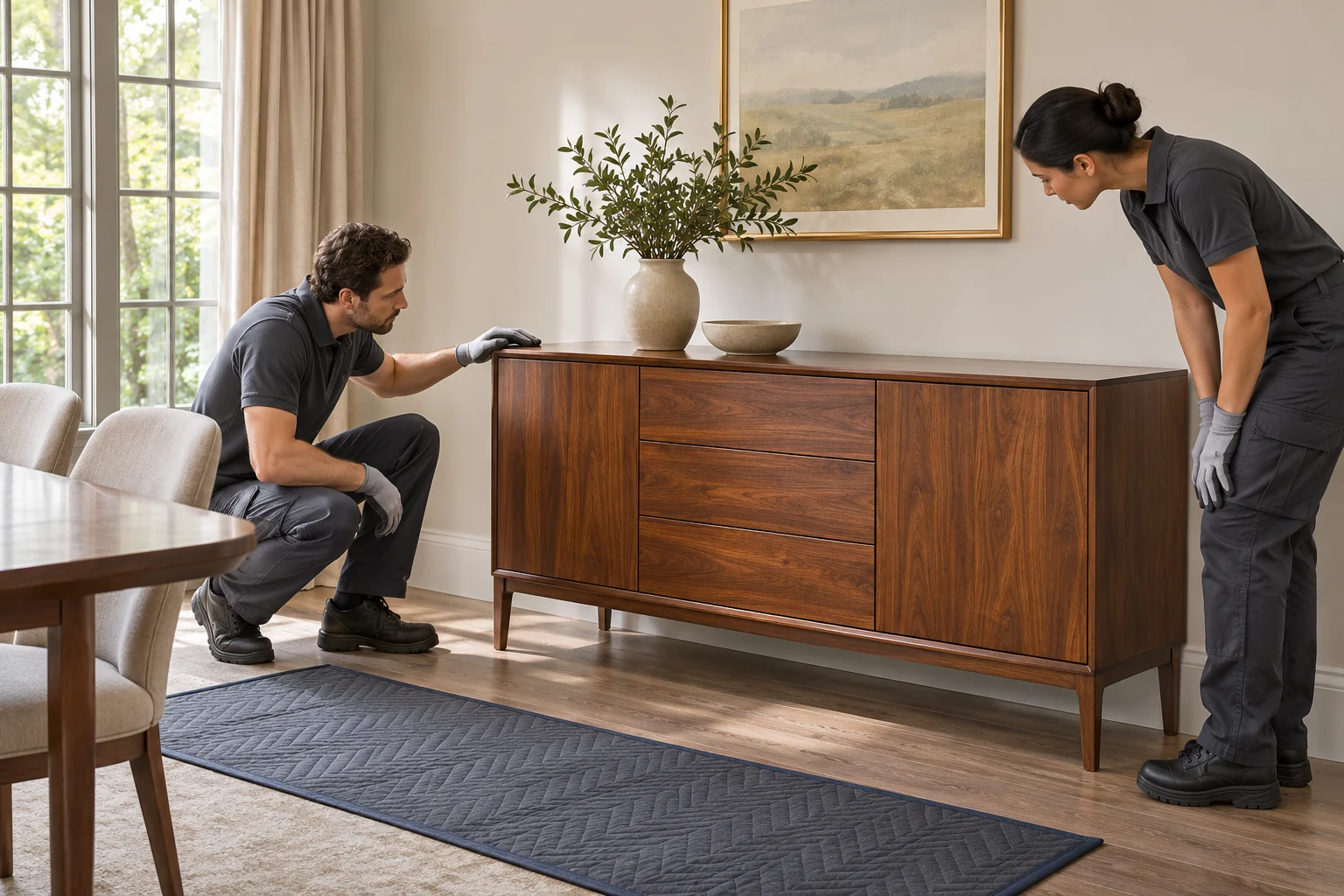
White glove moving is a service description that needs to be translated into specific tasks. One proposal may include detailed packing, room placement, and removal of materials. Another may use the same phrase for a narrower delivery service. Before comparing providers, decide what extra attention your belongings and property require, then ask each company to describe how its written scope addresses those needs.
The label alone does not establish a handling method, protection level, or guaranteed result. A useful agreement identifies the items, preparation, access, placement, and follow-up included in your booking. This guide explains how to define that work and assess a proposal without relying on an attractive name as a substitute for practical details.
Describe the outcome you want
Start with the rooms and belongings involved. Perhaps you need delicate furniture unpacked and placed in an occupied home. Perhaps a collection requires individual assessment, or the destination needs carefully coordinated access. Explain the outcome in ordinary language. Statements such as place the sideboard against the dining-room wall are easier to assess than a general request for premium service.
Separate necessary services from preferences. You may require protective packing but prefer a particular delivery sequence. A building may require a loading reservation while you would like empty cartons removed immediately. Record which conditions are essential and which remain flexible. That distinction helps a provider explain what it accepts and where the arrangement may need adjustment.
Build an item-level scope
List furniture, artwork, mirrors, lighting, and other belongings that need individual discussion. Include dimensions, materials, photographs, and known condition concerns. Explain detachable elements, previous repairs, and pieces with fragile finishes. Ask the provider whether it needs additional assessment before deciding on preparation. High attention to detail begins with accurate information about the actual goods.
Do not assume cost or appearance alone determines handling needs. A modest inherited cabinet may have a weak joint that matters more during transport than its market value. A valuable piece may also need a separate declaration under the provider's terms. Discuss construction, condition, and responsibility as distinct questions rather than compressing them into the word valuable.
Specify packing responsibilities
Ask which items the provider will pack and what preparation method it proposes. Confirm whether materials, custom preparation, disassembly, and documentation are included. If a separate specialist will prepare an item, identify that business and its handoff to the mover. Avoid assuming that every decorative object fits the same packing method because they share a room.
Our packing services guide explains how to divide work between your household and the provider. For a white glove booking, make the division especially clear. Identify owner-packed cartons, objects that remain untouched, and items needing further approval. Keep the agreed preparation details beside the inventory so the crew does not have to infer your expectations on arrival.
Discuss the property as carefully as the goods
Show the provider flooring, entrances, corners, stairs, elevators, and any surfaces you are concerned about. Ask what protection it proposes for the assessed route. Include both pickup and delivery properties. A carefully prepared piece still needs a workable path from its original position to the vehicle and from the destination entrance to its final room.
Confirm what the building requires for loading, access hours, reservations, and documentation. If a concierge or manager coordinates entry, provide current details. Our apartment moving guide addresses shared-building arrangements. Explain restrictions before booking rather than treating property requirements as details the crew can negotiate at the door while other residents wait to use the entrance.
Define unpacking and placement
Ask whether unpacking means opening packaging, removing goods, arranging items on surfaces, or putting them into storage spaces. Those tasks involve different amounts of work and personal judgment. Decide where you want assistance and where you prefer privacy. A provider needs permission and clear boundaries before placing personal belongings inside drawers, cupboards, or other private areas.
For furniture, prepare a destination plan showing final positions. Measure uncertain spaces and check that doors and drawers can open in normal use. Ask whether repositioning is included and how much direction the receiving contact must provide. A clear room plan supports careful placement more effectively than expecting the delivery crew to choose a complete interior arrangement for you.
Clarify assembly and installation
Identify which pieces need approved disassembly and reassembly. Share instructions and known concerns about fittings or previous repairs. Ask the provider to state what its assembly work includes and what falls outside its service. A bookshelf assembled at delivery is a different task from securing it to a wall or altering a fitted installation.
Keep electrical, plumbing, gas, structural, and other technical work assigned to appropriately qualified providers. Do not assume the phrase setup includes all those tasks. For unusual items, review the specialty moving guide. Your written sequence should explain which business transports the item, which business installs it, and when the item is ready for normal use.
Ask who will perform each service
Record the legal identity of the business taking the booking and the business performing the work. If another company supplies packing, transport, assembly, or installation, ask how it will be identified and coordinated. You should know who receives instructions and who answers when a question concerns a particular stage rather than being passed between unfamiliar businesses.
The guide to choosing movers provides a broader screening process. Apply the same identity and communication checks to a carefully specified service as to any other move. The tone of advertising does not establish operational responsibility. Ask how the accepted inventory and property instructions reach the people who will actually attend the appointment.

Understand protection terms separately
Request the written terms that address loss, damage, and the responsibilities applying to the accepted services. Ask about declarations, exclusions, and any separately supplied insurance. Do not assume a white glove label changes the applicable protection automatically. The company's explanation should point to the actual agreement and the choices available for your particular booking.
Photograph belongings and record existing condition before preparation begins. For interstate household moves, the FMCSA inventory guidance explains the role of an inventory in documenting items and condition. Keep your records and the provider's documents accessible. A clear description is more useful than discovering later that everyone used the word pristine differently.
Compare proposals by included work
Give each provider the same item list, access information, placement plan, and service priorities. Compare packing, materials, disassembly, transport, unpacking, assembly, placement, and disposal separately. Mark a category as excluded or unresolved when appropriate rather than assuming it is included because the overall service sounds comprehensive. Keep the date and version of every proposal.
Use the moving costs and quotes guide to organize the comparison. Ask how additional work is approved and documented. A change from placing a chair in a room to moving it through another restricted route may affect the job. Understand the revision process before relying on an informal request made after the crew arrives.
Agree on a communication plan
Choose one main contact who understands the items, property restrictions, and final positions. Give that person authority to answer routine questions and clear limits on decisions requiring your approval. If you cannot attend, prepare an accessible reference sheet and explain how you can be reached. A proxy receiving expensive or delicate belongings needs more than a key to the front door.
Ask who will lead the crew and how instructions will be reviewed at the beginning. Keep important directions in writing, but expect a practical walkthrough as well. Point out belongings that stay behind, areas the crew should not enter, and any changed access conditions. The purpose is a shared current plan rather than a stack of disconnected emails.
Plan around an occupied home
Decide which rooms can remain usable while packing or delivery occurs. Keep a clear route and set aside personal belongings you will need during the appointment. Arrange supervision for children and pets away from the working area. If other contractors are present, coordinate their work so moving activity does not conflict with repairs, painting, or installations in the same space.
Tell the provider about people who need continued access to a particular room or entrance. Ask how those requirements fit its proposed sequence. Do not surprise the crew with a route that must remain open for an appointment it did not know about. Careful planning includes the household's practical use of the property as well as the treatment of the goods.
Define material removal and completion
Ask whether empty cartons, padding, crates, and other materials are removed during the appointment or collected later. Clarify which materials belong to the provider and which become yours. If reusable equipment remains temporarily, confirm the return arrangements. A tidy handoff requires a specific plan for what stays in the home after the goods have been unpacked.
Decide how you and the provider will confirm completion. Walk through the agreed rooms, check placement and accepted assembly, and discuss any remaining tasks. Keep concerns specific and use the company's stated reporting process. A final walkthrough should compare the completed work with the written scope rather than asking whether the experience felt sufficiently premium.
Prepare a decision record for delicate pieces
For an item needing several choices, keep a short record of the assessment, packing method, destination position, and person authorized to approve changes. Attach photographs where useful. If the provider requests a further review, note what remains unresolved and when it will be decided. This keeps a complicated piece from disappearing into an otherwise general household inventory.
For example, a fragile display cabinet may require separate discussion of shelves, doors, contents, and placement. Do not assume a proposal for the cabinet includes packing the collection inside it. Ask the provider to explain each accepted task and the condition record it will use. The same item can involve several distinct responsibilities that need clear agreement.
## Prepare a room placement brief
For a destination with several carefully arranged rooms, prepare a short placement brief before delivery. Use plain room names and identify the final position of the larger pieces. Include photographs or a simple plan where useful, but keep the instructions readable while people are working. A detailed design file is less helpful if the receiving contact cannot quickly answer which wall should receive a cabinet.
Identify decisions that remain yours. You might allow the receiver to approve ordinary carton placement while requiring a call before moving a delicate piece to a different room. Explain those boundaries to the provider. This prevents a substitute contact from making a significant choice simply because the crew needs an answer.
Check the plan against actual room dimensions and completed work at the property. A layout drawn before renovations may no longer match doors, flooring, or fitted furniture. Send material changes to the provider and ask whether they affect the accepted route or service. Keep only the current version available for delivery.
After placement, walk through the brief and identify any agreed task still outstanding. Use it as a practical completion record rather than a demand that the crew infer preferences that were never communicated. Give a receiving substitute the brief before the appointment and let them ask questions while you are available. The document should help them act on your actual instructions rather than make assumptions about an unfamiliar destination room.
Choose based on a defined service
An appropriate white glove moving proposal describes the work you need in terms you can check. It identifies the goods, preparation, access, destination tasks, and business responsible for each stage. Evaluate those details alongside scheduling, communication, and protection terms. A service name can introduce the discussion, but the written plan should support the decision.
Before booking, finish your item list and placement requirements, then ask the provider to confirm the accepted scope. Retain that version and update it when material details change. Defined responsibilities help the crew prepare for the job and help you recognize when it has been completed, from the first packing task through the final agreed placement.