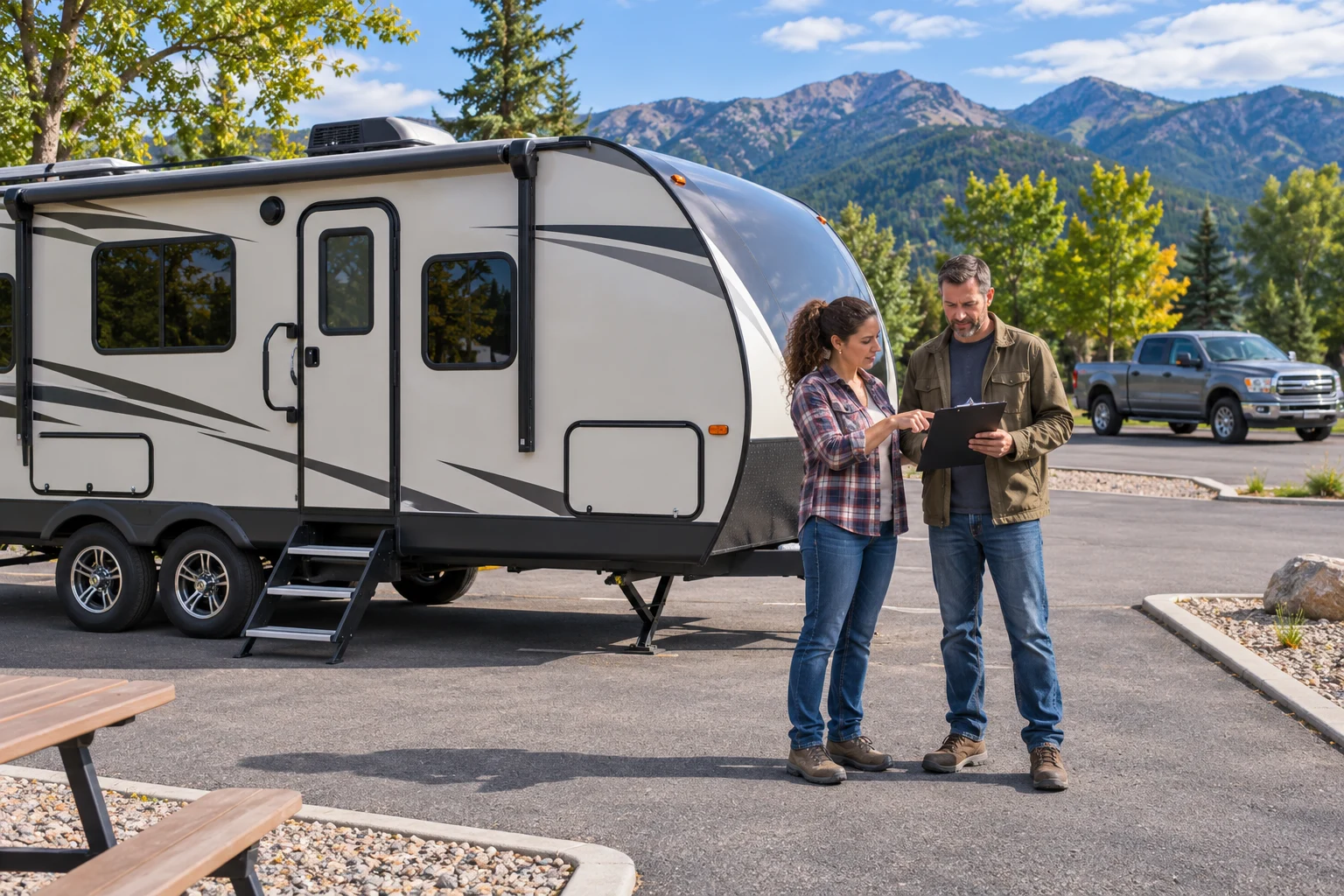
RV transport starts with identifying the vehicle and the proposed method. A motorhome, travel trailer, fifth wheel, and other recreational vehicles can require different arrangements. Tell the provider what you own, its current condition, where it is located, and where it must go. Do not treat the phrase RV transport services as a complete description of the work.
This guide focuses on preparing a transport assessment and coordinating the handoffs. It does not provide towing, hitching, loading, or mechanical instructions. Those decisions require the actual vehicle specifications, manufacturer guidance, qualified assessment, and applicable route requirements. Your role is to supply accurate information, understand the accepted service, and make the RV and both sites ready for that service.
Identify the RV accurately
Record the manufacturer, model, year, configuration, and relevant identification details. Obtain dimensions and weights from reliable records and the vehicle's current configuration rather than guessing from a similar model. Include additions that change height, width, length, weight, or clearance. Tell the provider whether published dimensions exclude any accessories or whether you are uncertain about a measurement.
Photograph the RV from several angles and show features relevant to handling and access. Mention attached equipment, previous modifications, and condition concerns. If the vehicle has been in storage, explain how long it has been unused and what you know about its current readiness. The provider needs to assess the actual vehicle presented, not a brochure description detached from its present condition.
Ask which transport method is proposed
Have the provider explain whether the arrangement involves driving, towing, carrying, or another accepted method for the particular RV. Ask who performs the work and what preparation the method requires. Do not assume a business offering one form of vehicle transport accepts every recreational vehicle or every condition. Get the actual RV identified in the proposal.
If you are comparing providers, ask each to describe the same vehicle and route before comparing price. Our car shipping company guide offers general questions about business identity, transport roles, timing, and written terms. Apply those questions while recognizing that an RV may require additional vehicle-specific assessment and equipment beyond an ordinary passenger-car shipment.
Establish whether technical work is needed first
Ask an appropriate qualified professional to assess issues outside your knowledge. Explain known problems involving tires, brakes, steering, electrical systems, structural condition, or other components relevant to the proposed method. Follow the manufacturer's instructions and the accepted provider's requirements. A transporter arriving for a scheduled collection should not be the first person told about a condition that may prevent the planned service.
NHTSA's tire safety guidance emphasizes using the vehicle manufacturer's tire information and maintaining tires appropriately. Use that as a starting point for questions, not a substitute for an RV-specific inspection. Do not infer readiness from appearance alone or apply a universal tire pressure to every vehicle. Refer the actual specification and condition questions to qualified people.
Confirm the route assessment
Provide origin and destination addresses and any known restrictions affecting access. Ask who evaluates the transport route and identifies requirements connected with dimensions, weight, or the method used. Do not assume a route suitable for your car is suitable for the RV or transport equipment. The provider should explain what information it needs and which parts remain subject to assessment.
If a permit, escort, or other route-specific arrangement may apply, ask the qualified provider to establish the actual requirement through the appropriate authorities. Avoid relying on an unsourced size threshold from a general article. Rules and conditions depend on the route and configuration. Keep confirmed arrangements with the booking so the plan is based on the applicable assessment rather than a broad assumption.
Assess collection access separately
Show the route from the parked RV to the agreed collection point. Include gates, corners, slopes, overhead features, soft ground, and restricted working space. Explain whether the RV is stored among other vehicles or equipment. A place where it can remain parked may not provide enough room for the proposed transport operation.
Ask the property owner or storage operator about permissions, appointment hours, and who must be present. Keep the provider informed about any access code or controlled entry process through an appropriate channel. If another vehicle or obstruction must be moved first, assign that task and confirm completion. Collection should not depend on finding an unavailable owner of an unrelated object after equipment arrives.
Make the destination genuinely ready
Confirm that the destination can accept the RV under the proposed method and schedule. Check site access, working space, placement, and the person authorized to receive it. If it is going to a campground, dealer, repair facility, storage yard, or private property, obtain that location's actual instructions. A postal address alone does not establish an accepted delivery arrangement.
Ask who will position the RV and where the transport service ends. If further installation, connection, servicing, or movement is needed, arrange it separately with an appropriate provider. Our relocation services guide explains how to coordinate related appointments without merging their responsibilities. The plan should identify the final usable handoff rather than assuming every destination task follows from transportation.
Prepare the interior under the accepted instructions
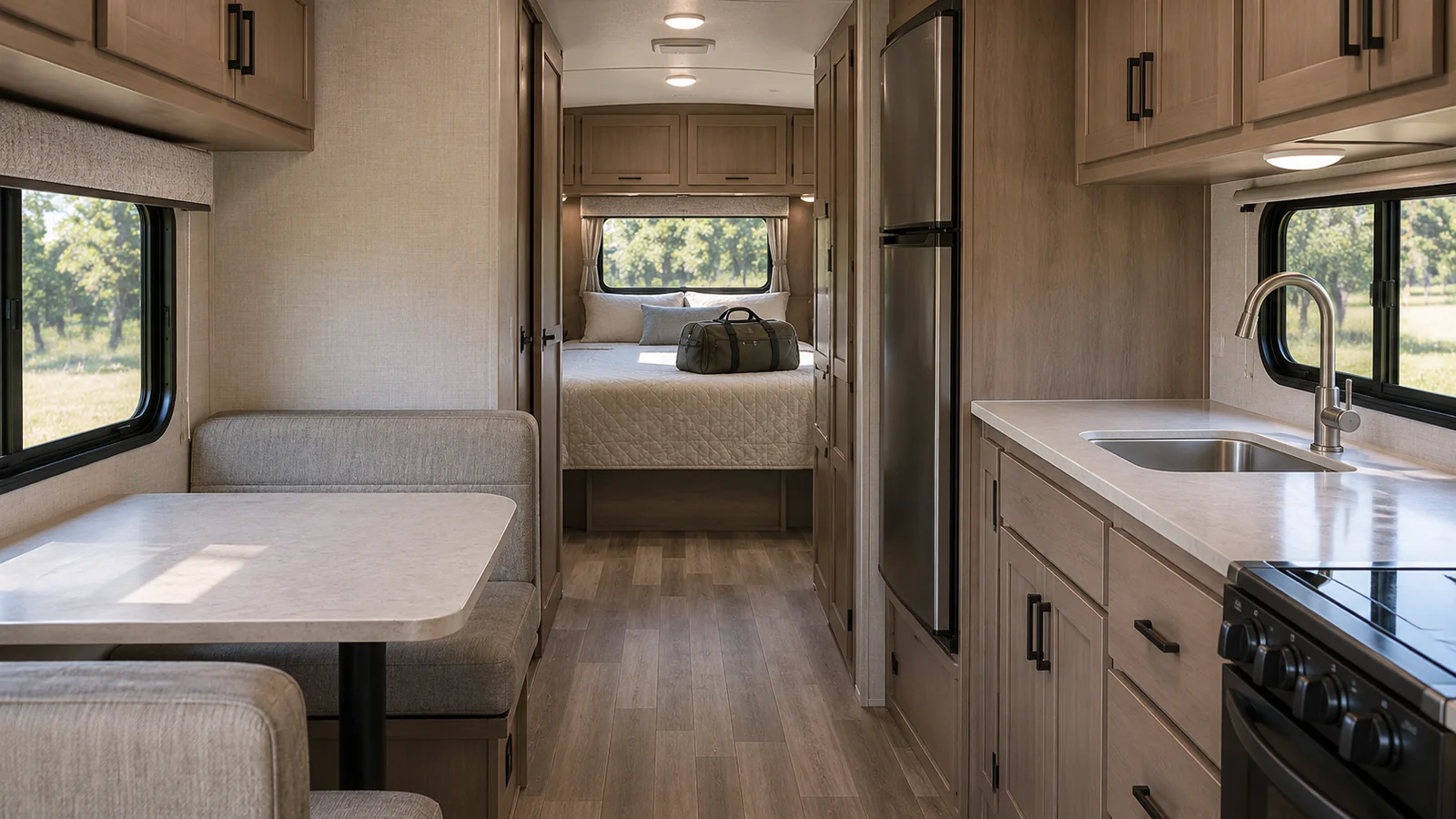
Ask the provider what it requires concerning contents, loose belongings, cabinets, appliances, tanks, and onboard systems. Follow the instructions applicable to the actual vehicle and method. Do not assume ordinary household packing guidance answers every RV preparation question. Equipment and systems installed in a recreational vehicle may have their own manufacturer requirements.
Keep documents, valuables, essential medication, keys you still need, and travel supplies with you. If belongings must be removed, arrange their separate transport or storage before collection. Our packing services guide can help organize household contents once you know what must leave the RV. Avoid creating a last-minute pile with no destination while the transport appointment is beginning.
Review exterior additions and equipment
Tell the provider about awnings, racks, satellite equipment, spare carriers, roof additions, and other components affecting the accepted configuration. Ask which preparation is required and who should perform it. Do not remove, fold, disconnect, or modify equipment based only on a generic checklist. Use the relevant manufacturer instructions and qualified help where the task requires it.
Document anything removed and decide how it will reach the destination. Keep associated parts identified and retain instructions needed for later setup. If preparation changes the vehicle's dimensions or condition, update the provider. The transport assessment and booking should reflect what will actually be collected rather than the configuration shown in an earlier photograph.
Keep keys, documents, and authorization organized
Ask what documents and access devices the provider needs for its role and how they should be supplied. Keep original personal records under appropriate control and retain accessible copies of the booking information. If a representative will release or receive the RV, confirm the provider's authorization requirements before the appointment. A helpful friend may still need formal permission under the accepted process.
Give that representative practical instructions and clear limits. They should know the vehicle, condition concerns, destination, and contact method for decisions. Avoid sharing unrelated private information. If a dealer or storage operator is involved, ask how its release process aligns with the transport appointment. Each party should know which records it is responsible for completing and retaining.
Compare the full cost and service terms
Request a proposal describing the RV, method, route, preparation assumptions, and timing. Ask which services are included and which are separate. Technical preparation, site work, access arrangements, storage, and destination services may involve different agreements. Keep them visible together in the household budget rather than comparing only the central transportation figure.
Our moving costs and quotes guide explains a method for comparing complete scopes. Ask how a changed condition, inaccessible site, or revised destination affects the agreement. Read payment, cancellation, rescheduling, and refund terms before committing. Do not assume keeping a date open or receiving an initial figure establishes a confirmed booking under every provider's process.
Coordinate timing with personal travel
Ask which collection and delivery dates are requested, estimated, or confirmed. Understand the update process and who will contact the receiving location. If you normally use the RV for accommodation, plan where you will stay after release and before receipt. The transportation booking does not automatically provide a place for you or your belongings during that gap.
If this move is part of a wider household relocation, put the RV, furniture, personal travel, and destination appointments on one calendar. Our long-distance moving guide explains those handoffs. Keep separate responsibilities intact while aligning the dates. A change to one shipment may require practical updates elsewhere even when the other agreements themselves do not change.
Record condition at the handoffs
Ask how the provider documents condition at collection and delivery. Keep photographs and relevant observations with the booking records. Distinguish visible condition from technical performance: a routine handoff is not necessarily a qualified inspection of every onboard system. If you have a technical concern, arrange appropriate professional assessment rather than expecting an ordinary receiving contact to diagnose it.
Request the written terms addressing loss or damage and the process for reporting concerns. Clarify responsibilities if several businesses participate. Do not assume a general insurance statement explains every limitation or service stage. Keep records of removed accessories, supplied keys, and other handover items so you can check that the final receipt matches the arrangement you accepted.
Respond to changes before collection
Tell the provider promptly if the RV develops a problem, the access route changes, or destination readiness is delayed. Ask for an updated assessment where needed. A service method accepted under one set of conditions may not apply unchanged to another. Keep revised instructions with the current booking and inform the people releasing and receiving the vehicle.
Avoid pressuring anyone to improvise an unsuitable operation because travel or accommodation has already been booked. Ask what needs to change and who is responsible for the next step. An understood revision is more useful than an uncertain attempt to preserve the original timetable. Keep the decision focused on the actual vehicle, site, method, and accepted responsibilities.
## Review the plan using the actual configuration
Before the final readiness check, compare the RV beside you with the information supplied for the proposal. Confirm that additions, removed components, contents, and known condition issues are reflected accurately. Ask the provider about any discrepancy rather than deciding yourself that it will not matter. A small-looking change may be relevant to the assessed method or preparation requirements.
Use the same review for the sites. A newly parked vehicle, locked gate, unfinished driveway, or changed receiving contact can affect an otherwise prepared appointment. Tell the responsible provider what changed and ask whether it needs further assessment. Do not supply reassurance in place of the facts it needs.
Keep one current readiness record identifying completed preparation, outstanding questions, and the people responsible for the next stage. The record does not replace technical approval, but it helps everyone see whether that approval has been obtained and whether the surrounding arrangements remain valid.
When the handoff is complete, retain this information with the booking documents. It provides a useful account of the vehicle and conditions accepted for transport if another question arises at destination. Keep technical instructions accessible for the qualified people completing any remaining inspection, connection, or setup after the delivery.
Complete the destination sequence
Before arrival, confirm that access remains available and that the receiving contact is ready. Check condition, documents, keys, and any separately handled components through the agreed process. Arrange any remaining professional preparation before normal use where appropriate. Follow manufacturer and provider instructions rather than assuming that completion of transport means every system is ready to operate.
An RV transport plan works when the vehicle specification, technical readiness, route, and sites have all been assessed. Supply accurate information, assign preparation tasks, and keep both handoffs clear. That approach lets qualified providers decide the method while giving you a practical record of what must happen before collection, during transport communication, and after the RV reaches its destination.