Pool table movers should assess the table, both access routes, and the setup you expect at delivery before accepting the job. A table is more than a heavy piece of furniture. Its construction, playing surface, components, and final positioning all affect the service you need. Begin with accurate identification and ask the provider to explain its proposed scope.
This guide focuses on planning a professional pool table move. It covers collection records, room measurements, disassembly and reassembly responsibilities, proposal comparisons, and the final handoff. It does not provide a lifting or dismantling procedure. The relevant specialist should decide how the actual table is prepared, transported, and set up under its manufacturer's guidance and the assessed site conditions.
Identify the table before requesting a quote
Record the maker, model, approximate age, and dimensions if known. Share photographs of the full table, frame, legs, pockets, and any visible identification. Explain whether you have an instruction manual or previous installation records. If you do not know the construction, say so and ask the provider what it needs to establish it.
Mention accessories separately. Cues, racks, balls, covers, benches, lights, and room furniture may or may not be part of the table booking. A hanging light or wall-mounted rack introduces different preparation from a loose accessory. Create a clear inventory so neither the provider nor the receiving person has to infer which objects are included from a photograph of the whole room.
Document existing condition
Take dated photographs of the table's finish, cloth, pockets, visible joints, and any known concern. Tell the provider about previous repairs, loose components, damaged surfaces, or issues with play. A visible condition record is useful, but it does not replace an assessment by someone qualified to evaluate the table and its setup.
If you are buying the table from another person, ask for available history and confirm the condition you are accepting. Keep that transaction separate from the moving agreement. The mover can assess transport and setup responsibilities, but should not be expected to settle a disagreement about whether the seller accurately described the table or included a particular accessory.
Use the maker's guidance as a starting point
Ask the manufacturer or an appropriate dealer which instructions apply to your model and whether particular service arrangements affect a warranty. Do not assume advice for a similar table applies to yours. Brunswick's billiards table care guidance recommends experienced professionals for moving its tables. Use the relevant maker's guidance for the actual table you own.
The provider should explain what assessment and preparation it proposes rather than inviting you to improvise disassembly. If parts must be removed, identify who does the work and how components will be protected and tracked. A written scope is more useful than a broad promise to move the table carefully without explaining what happens before loading and after delivery.
Assess pickup access in sequence
Show the route from the table's current room to the approved vehicle position. Include steps, doorways, corridors, turns, landings, and shared access. Provide photographs in order so the provider can understand the relationship between the spaces. Mention restricted loading times, elevator reservations, and any surface or feature that may need particular consideration.
Ask whether the initial information is sufficient or an in-person visit is needed. Do not conclude that a route is suitable because the assembled table fits through the widest doorway. The provider must assess how the components and its equipment can be handled through the complete route. Avoid altering doors, railings, or other features without appropriate approval and competent help.
Measure the destination as a playing space
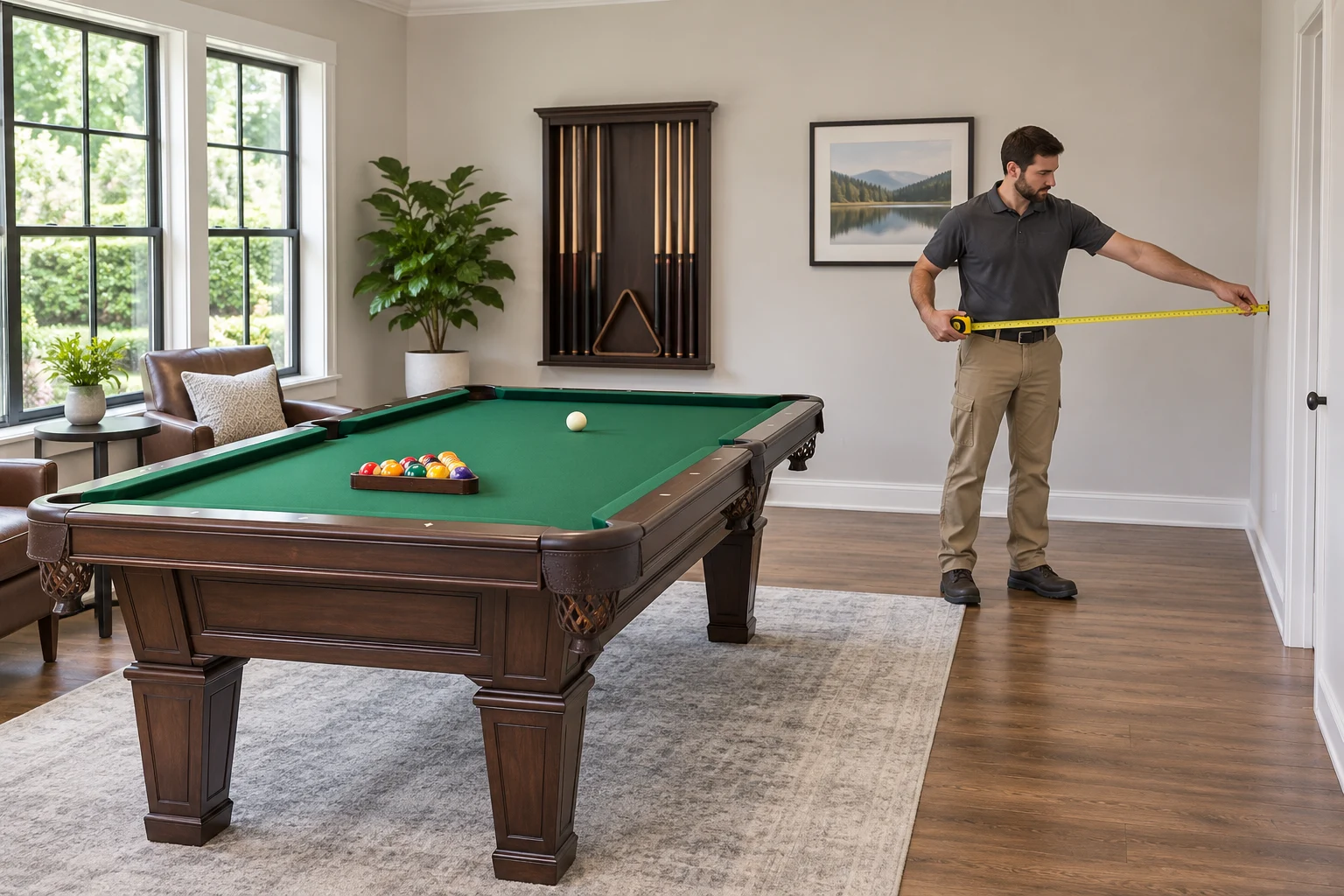
Measure the intended room and consider usable space around the table, not just its footprint. Tell the installer about walls, columns, fixed furniture, door swings, and other features that affect the proposed layout. Ask the specialist or manufacturer about the space needed for your table and the equipment you intend to use. Avoid relying on a generic room-size claim for every setup.
Choose the intended position before delivery and discuss uncertainty during the assessment. If you are renovating, confirm when flooring, painting, lighting, or other work will be finished. A room that is technically accessible may not be ready for final table setup. Repositioning the table afterward could involve another service and should not be assumed to be a simple household task.
Separate transport from complete setup
Ask exactly what the booking includes at origin and destination. Identify disassembly, protection, transport, reassembly, leveling, and any agreed work on the playing surface. One provider may perform the whole sequence, while another handles transport and coordinates a separate installer. Keep the participating businesses and responsibilities visible in the written plan.
Our specialty item moving guide explains how to coordinate technical tasks with transportation. Apply that approach to the table rather than assuming a household moving crew includes complete billiards setup. If another business performs the final work, ask what it needs from the transport team and how the component handoff will be recorded.
Decide whether repairs belong in the project
If the cloth, cushions, pockets, or another component already needs attention, ask a qualified billiards professional whether to address it during the relocation sequence. Request a separate description of the proposed repair and its timing. Moving can create an opportunity to coordinate work, but it does not mean every repair is automatically necessary or included.
Keep optional improvements separate from required transport preparation. Ask what happens if you decline an optional service and whether the original move can still proceed as assessed. You should understand which tasks protect the accepted transport method and which tasks concern your preferences for the finished table. That distinction supports a more useful budget and a clearer final inspection.

Compare proposals against one scope
Give each provider the same table information, access details, destination position, and service request. Mark unresolved points clearly. Ask whether the total includes all agreed stages or only a part of the sequence. A lower figure may exclude setup, materials, or an accessory booking that another proposal includes. Compare the actual work rather than the headline alone.
The moving costs and quotes guide offers a method for keeping included, separate, and unknown charges visible. Do not use a general furniture-moving price as proof of what a pool table move should cost. Ask how changed access, additional services, waiting, or rescheduling are handled and how you approve any revision before work proceeds.
Coordinate collection from another household
If the table is being purchased or gifted, confirm who will release it and who has authority to approve preparation. Give the mover and releasing person the agreed appointment information. Resolve purchase payments and ownership questions separately. The transport crew should arrive to a defined job, not an unresolved discussion about whether the table or accessories can leave.
Ask the releasing contact to clear the agreed route and remove unrelated belongings. Explain what must remain untouched for the specialist to assess. If the seller has already dismantled components, tell the provider before booking and supply photographs. Do not assume a mover will accept responsibility for unidentified parts or preparation performed by someone else without reviewing the situation.
Plan household work around the table appointment
Reserve the route and working space the specialist requires. Packed cartons, cleaning equipment, and other furniture should not block the area when the crew arrives. If a household move is happening the same day, agree on the sequence with both providers. Their vehicles, people, and equipment may need the same entrances or loading positions.
Our local moving labor guide can help define the household side of the arrangement. Keep one main contact responsible for timing and updates. If the general crew's arrival changes, tell the table specialist directly. Do not assume separately booked businesses will discover and resolve a conflict without a coordinator passing along current information.
Review storage if the room is unavailable
Discuss any expected gap between collection and final setup before the table is prepared. Ask whether the provider accepts storage, what conditions it offers, how components are inventoried, and how redelivery is arranged. If another facility is involved, identify the business responsible at each handoff. Keep manufacturer or installer guidance available to the relevant people.
Read our moving and storage guide for general timing and access questions. Do not assume that components can be placed in any available household storage space without the specialist's review. Ask how the accepted storage arrangement affects the setup schedule and whether an extension requires revised terms. A temporary holding plan should lead clearly to the final installation appointment.
Understand condition and reporting terms
Request the service terms covering the accepted table and components. Ask how the provider records condition, what protection arrangement applies, and how you report a concern. If a separate installer or carrier participates, clarify the boundaries. A statement that the job is covered does not explain which business handles a question about transport damage or incomplete setup.
Retain the condition photographs, inventory, accepted proposal, component records, and correspondence. Our guide to choosing movers explains general identity and communication checks. Add a table-specific discussion about completion: what will the provider demonstrate or review with you, which tasks remain separate, and how any outstanding work will be documented at the destination?
Keep the work area ready and supervised
Before arrival, confirm the route remains as assessed and report any new obstruction or condition. Keep children, pets, and visitors out of the working space. Have a contact available to answer questions, but leave handling decisions to the professional team. Do not try to help with a heavy component unless the provider has given an appropriate instruction within its accepted method.
If the crew finds the conditions differ from the booking, allow a review. A changed route, incomplete room, or missing component can affect the plan. Ask what needs to happen next and record the agreed revision. Pressure to finish quickly does not resolve an unsuitable condition or give the provider the information it needed before the appointment.
## Agree on the completion discussion
Before booking, ask the setup provider what it will review with the receiving person when its work is finished. Identify the agreed placement, component inventory, setup tasks, optional repairs, and any limitations. The discussion should correspond to the accepted scope rather than an informal assumption that every possible adjustment is included.
If the table is being delivered to someone else's property, give that person the current plan and explain which decisions they may make. Confirm any authorization the provider requires. Keep the intended position and room access instructions easy to find so the receiver can answer practical questions without guessing.
If a component is missing, the room is unfinished, or a further task is identified, ask the provider to document the issue and explain the next step. Establish who will arrange the follow-up and whether it belongs to the existing agreement or a separate service.
Retain that record with the original inventory and photographs. It will help you distinguish completed work from an outstanding appointment and give the next specialist accurate information if another person takes over the remaining setup. Ask the receiving person to retain the updated record and pass it to you, together with any instructions or appointment details the provider supplies during the final walkthrough.
Finish with an understood setup
At delivery, confirm the table's agreed position and review the completed work with the responsible specialist. Check the accessory inventory and record any visible concern through the provider's process. Ask for the care or follow-up instructions relevant to the work performed. Do not assume an arrival signature explains every remaining technical task or replaces a proper completion discussion.
Keep the service records with the table's manual and maintenance information. A well-planned pool table move connects identification, assessed access, suitable preparation, and complete setup. Describe that whole sequence when requesting proposals. Then each provider can assess the same job, the destination can be ready at the right time, and the final handoff can focus on the table you actually intend to use.