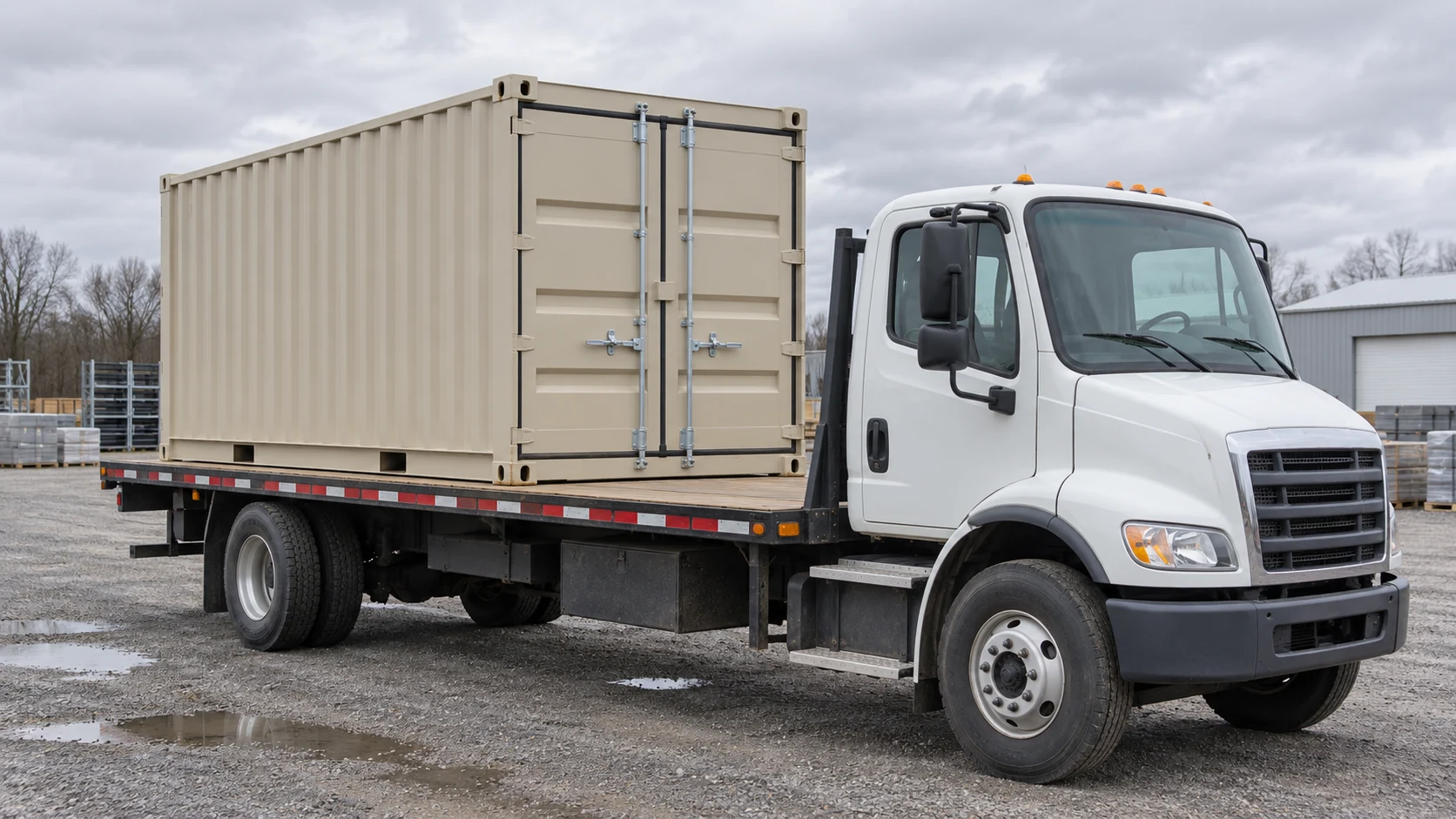
Moving container cost is the price of a sequence, not simply the rental of a box. A household may need delivery at the origin, time to load, collection, transportation, temporary holding, delivery at the destination, time to unload, and final removal. Start by mapping those stages. Then ask providers to price the same shipment, addresses, access conditions, and dates.
This guide focuses on the complete moving sequence, especially when a container connects two homes. For a container mainly used as ongoing storage, read the storage pod cost guide. Keeping those purposes separate helps you compare relevant charges rather than using a stationary monthly rental figure as a substitute for a household transportation estimate.
Draw the actual service sequence
Write each event in order from the container's first arrival to its final collection. Include where the goods will be during any gap and who controls the next step. Ask the provider to confirm which stages its proposal includes. A clear sequence makes it easier to identify work you must arrange yourself and charges that belong outside the quoted transport.
Do not skip a stage because it sounds routine. Loading, pickup, transfer, destination access, and unloading all require some combination of time, preparation, or service. If a company supplies only part of the arrangement, identify the missing provider. A complete budget should reflect how the belongings actually reach the destination room rather than ending when the transport vehicle arrives nearby.
Give every provider the same inventory
List furniture, estimated cartons, outdoor goods, and bulky belongings. Include unusual dimensions, weight information where known, and anything requiring separate assessment. Tell providers what remains undecided. A household described only by bedroom count may receive proposals based on different assumptions, making the totals difficult to compare even when the companies appear to offer similar container services.
Sort before the final estimate where possible. Decide which belongings will travel and which will leave the household by another route. Record changes and ask for updated proposals when the shipment materially changes. Our moving estimate survey guide explains preparing useful inventory information. The same principle applies when the service uses a container rather than a traditional staffed move.
Confirm capacity and accepted contents
Ask how the provider selects the container size and what limits apply. Describe large furniture and awkward pieces that may affect loading. Do not assume a container can accept an item because it fits through the door. The provider may need to assess the contents, intended loading method, and applicable restrictions before accepting the shipment.
Find out what happens if you need more capacity than originally planned. Ask about the scheduling and charging consequences of another unit or changed service. Avoid making a budget work on paper by assuming every item can be packed into the smallest option. An accepted, properly prepared shipment is the objective; filling every visible space is not a substitute for a suitable plan.
Check access at both properties
Give the provider origin and destination addresses and describe the proposed placement area. Ask about delivery equipment clearance, surface requirements, slopes, gates, overhead obstructions, and the room needed to operate. A destination that can fit the container may still be unsuitable for the vehicle or method used to place it. Get the provider's assessment for both ends.
Check relevant property and local requirements through the appropriate manager, owner, association, or authority. Ask about permission, placement, duration, and any conditions affecting access. Keep those approvals with the booking. Do not assume a public street or shared area is available simply because it offers the shortest route to the front door. Access assumptions belong in the price comparison.
Separate transportation from loading labor
Ask whether labor is included or whether you must arrange packing, loading, and unloading independently. If you hire separate crews, give them accurate container and access details. Confirm who supplies protective materials and who is responsible for securing the accepted load. A container transport proposal should not be interpreted as a promise to complete every handling task around it.
The loading and unloading services guide explains coordinating that work. Include help at both properties in the budget. Ask each crew how waiting, delays, or rescheduling are handled if the container arrives at a different time. Those arrangements can affect the full household cost even when the transporter's own proposal does not change.
Include packing and materials
Create a separate estimate for cartons, protective preparation, and any hired packing work. Ask the container provider for its requirements and restrictions before choosing materials. If furniture needs disassembly or individual assessment, assign that responsibility explicitly. Do not assume the company moving the container has accepted technical or specialist preparation simply because those belongings form part of the household.
Our packing services guide explains full and partial assistance. If you pack independently, include the supplies you actually need rather than assuming all cartons are already available. Keep fragile and unusual items visible in the plan. A lower transportation figure may require more preparation than another service, which matters when you compare the complete cost and your available time.
Understand time at the origin and destination
Ask how much loading and unloading time is included and how the provider defines those periods. Confirm when charges begin, when collection must be requested, and what happens if you need more time. Do not assume every company includes the same number of days or applies the same extension policy. Use the actual written terms for each proposal.
Check the timing against building reservations, your travel schedule, and the availability of any hired labor. A flexible loading period is useful only when placement is permitted and the people doing the work can attend. If the destination allows a container for a limited period, explain that before booking. A constraint ignored during comparison can become a significant problem after arrival.

Price storage as an identified stage
If the new home will not be ready, ask where the container will be held and how that changes the service sequence. Confirm rental or storage charges, movement into and out of holding, access, and notice for redelivery. Keep those categories separate from the route transportation. An anticipated short gap should still have a defined arrangement.
Read the moving and storage guide when comparing container holding with other stored moving services. Tell providers which dates are uncertain. Ask how an extension changes both charges and delivery arrangements. A monthly figure alone does not explain whether the shipment is accessible or when it can reach the destination after your housing situation changes.
Compare quotes in a consistent format
Put each proposal beside the same categories: capacity, initial delivery, loading time, collection, route transport, storage, destination delivery, unloading time, and final removal. Add packing, materials, labor, and any accepted specialist work. Mark categories as included, separate, excluded, or awaiting clarification. Do not let an omitted line disappear from the household budget merely because one proposal is brief.
Use the moving costs and quotes guide to keep assumptions and versions organized. Ask providers to explain differences before choosing. One total may cover a sequence another has only partly priced. A useful comparison identifies the work and conditions behind each number rather than treating every document headed moving quote as an equivalent offer.
Ask how changes are approved
Discuss a realistic revision, such as a changed destination, added container, or delayed unloading. Ask what information the provider needs and how revised terms are issued. You do not need a hypothetical price for every future event. You do need to understand how the company documents a material change and when you must make the decision.
Keep written confirmation when the plan changes and retain the earlier version. Update separate labor, packing, travel, and property arrangements as appropriate. One changed transport date can affect several bookings that do not update automatically. Treat the budget as a connected household plan rather than a single invoice that represents every responsibility.
Review responsibility for belongings
Ask for the terms applying to the contents during loading, transportation, holding, and unloading. Clarify which tasks you retain and which the provider accepts. If separate crews load or unload, ask how their responsibilities fit with the transport arrangement. Do not assume all participating businesses offer identical protection or that one general statement about insurance answers every question.
Keep an inventory and condition photographs accessible outside the shipment. Record the legal identity and contact details of each business involved. Our guide to choosing movers explains screening and communication questions for the wider decision. Ask the provider which consumer information and service terms apply to your particular arrangement rather than assuming every moving model uses identical rules.
Include personal relocation expenses
Transportation and container charges do not represent everything your household may spend. Keep lodging, personal travel, meals, pet arrangements, cleaning, and arrival supplies in a separate part of the budget where relevant. Those costs depend on your own schedule and circumstances. Avoid assigning a universal allowance that hides a known expense requiring a more specific estimate.
The long-distance moving guide explains coordinating personal travel with shipment timing. If delivery or housing changes, update related assumptions promptly. A container service may give you loading flexibility while still requiring a plan for the days without your main belongings. Keeping personal costs separate lets you see that effect without confusing it with the transport provider's charges.
Test one plausible alternative
Compare the accepted container plan with one realistic alternative, using equivalent inventory and tasks. You might assess a staffed moving service or a rental truck with separate labor. Include preparation, driving responsibilities, access, timing, and unloading in each case. A transport-only figure should not be compared with a more complete service without accounting for the work you would retain.
Our cross-country moving options guide describes choosing among service models. The purpose is to identify a workable fit rather than prove that one method is always cheapest. A household with restricted access or little loading time may value a different arrangement from one with a suitable driveway and flexible schedule. Let those constraints inform the comparison.
## Keep an event-based payment record
Create a payment record that follows the service sequence rather than listing only a final total. Identify what each payment covers, when it is due, and which business receives it. Include separate loading or packing providers where relevant. Retain receipts and written adjustments so you can distinguish a remaining balance from a charge already settled at an earlier stage.
Before collection, compare the accepted sequence with the record. Confirm that deposits, scheduled payments, and any approved changes are documented. If the company revises an amount, ask which event or service changed and keep the explanation. A clear record helps you discuss the actual agreement without relying on a total remembered from the first quotation.
At the destination, keep the information available until unloading and final collection are complete. Those stages can occur after the main transport payment and still involve responsibilities you need to track. Do not discard the earlier records because the belongings have arrived in the destination area. Reconcile the arrangement when all accepted stages have finished and any questions have been addressed. Keep copies accessible to the person managing the move, and record who approved each material revision. This provides a practical reference if the final paperwork differs from an earlier accepted version.
Reconcile the final sequence before booking
Confirm the latest inventory, container capacity, addresses, access approvals, dates, and included services. Review payments, cancellation, rescheduling, and collection terms. Ask each separate provider to confirm its own booking against the current schedule. Keep the accepted documents accessible during the move so a question can be answered from the actual agreement rather than memory.
A useful moving container budget follows belongings from their starting room to their destination room. It explains the container, handling, transportation, storage, timing, and final collection as connected stages. Define that sequence first, compare providers on the same basis, and update the records when material details change. The resulting total describes the move you intend to make.