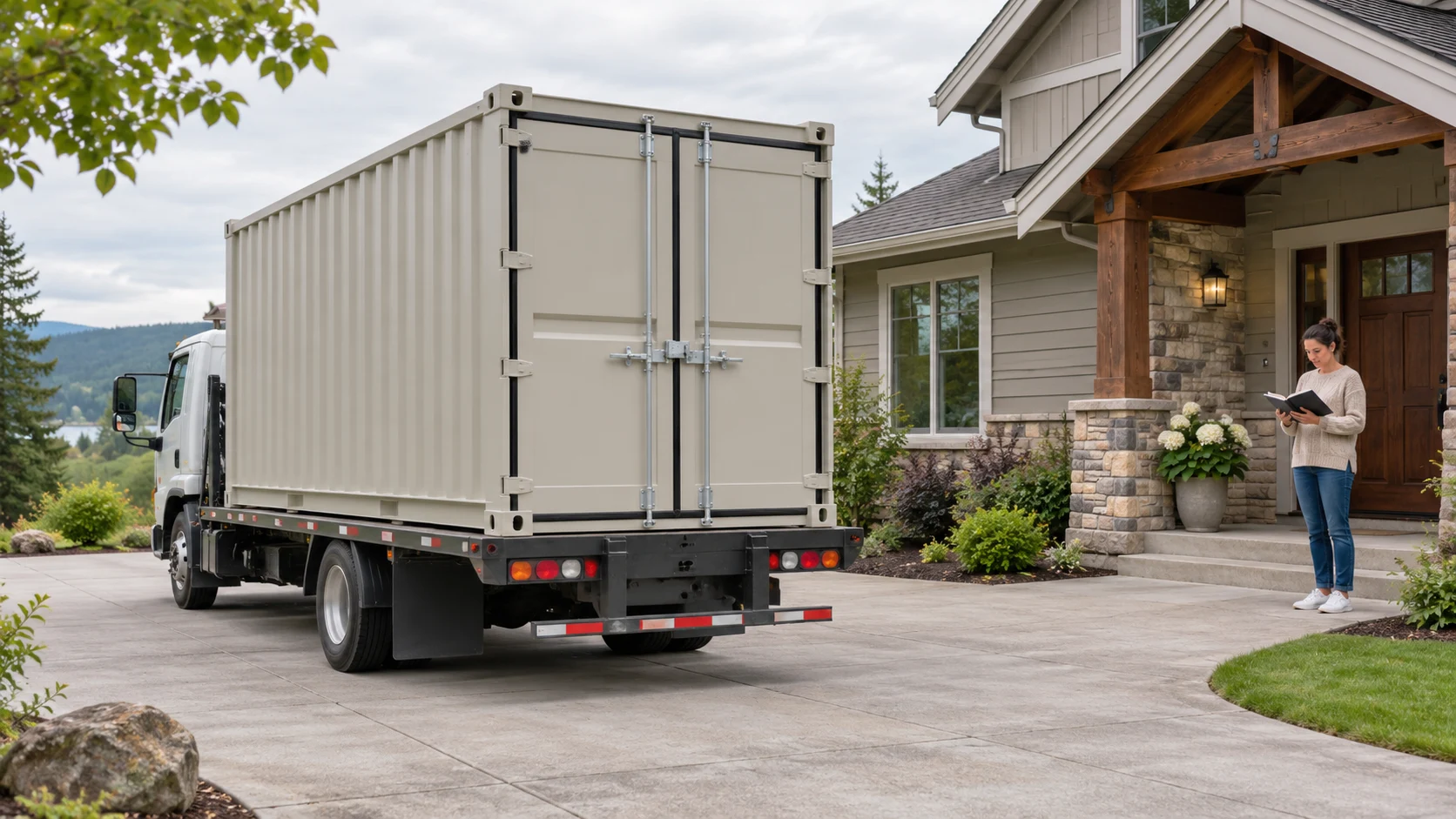
Long-distance moving pods divide a relocation into several appointments: container delivery, loading, collection, transportation, and destination delivery. Your household also needs a travel plan between those appointments. Start by putting each stage on one calendar and assigning the work around it. A container can provide a useful service model, but its name alone does not explain the timing, labor, or access included.
This guide focuses on coordinating a long-distance container move after you decide the general approach may suit your household. For a broader comparison of transport methods, read our cross-country moving options guide. Here, the main task is turning a series of separate events into a workable move, with confirmed responsibilities at both addresses.
Start with the destination handoff
Write down the earliest date you can receive the container and the latest date by which you need its contents. Those may differ from the day you arrive personally. Confirm when you have possession of the property and whether a building manager or another person must approve delivery access. An available street address is not the same as an accessible receiving site.
Ask the container provider what its delivery scheduling language means. Identify confirmed appointments, estimated periods, required notice, and conditions that remain unresolved. Keep the answers with the agreement. Then work backward through transportation, collection, and loading. This helps you see whether the proposed sequence supports the dates you actually need rather than the dates you initially hoped would work.
Confirm service at both addresses
Give the provider complete origin and destination information, including any provisional details. Ask it to assess whether the specific service is available for that route and those properties. Do not assume that collection from one address establishes suitable access at another. Changes to the final destination should be reported before you treat an earlier proposal as current.
For each property, describe the surface, slopes, entrances, overhead obstructions, and room needed for delivery equipment. Ask what measurements or photographs the provider wants. Follow its assessment rather than estimating clearance from the container's dimensions alone. A driveway can appear spacious while still presenting a problem for the equipment used to position or collect the unit.
Obtain placement permission
Ask the relevant property manager, association, or local authority about permission to place a container where proposed. Find out whether the approval addresses the location, duration, and any associated conditions. Keep the written response and expiration date. Requirements depend on the property and locality, so verify your actual situation rather than relying on a rule someone used elsewhere.
Tell the provider about the approved position and any limit on how long the container may remain. If public or shared access is involved, ask how other users will be accommodated. Avoid placing obstacles in a street or claiming a loading space without authorization. The loading schedule should fit the permission you actually obtained, including collection at the end.
Build a loading plan around availability
Decide who will pack and who will load. If the provider supplies only the container and transportation, those responsibilities remain separate. Book suitable assistance after you understand when the unit will be available and what changes are possible. Tell any labor provider about the loading surface, distance from the home, container type, and items it will handle.
Our loading and unloading services guide explains how to coordinate separate labor bookings. Ask how waiting, rescheduling, and unfinished work are handled. Avoid assuming a crew can remain indefinitely if a delivery appointment changes. Give each participating business the current contact details and make one person responsible for communicating changes across the plan.
Use the inventory to assess capacity
List the furniture, expected cartons, and bulky belongings entering the container. Include outdoor equipment and stored items that are easy to overlook. Show the provider anything unusually large or heavy, using verified specifications where available. Ask how it assesses capacity and what limits apply to the particular service. Do not substitute a bedroom count for an itemized discussion.
Ask what happens if the planned capacity is insufficient before loading starts. You need to understand the alternatives, additional appointments, and pricing method rather than discovering them after the collection date is near. If an item needs specialist handling, obtain acceptance and preparation instructions separately. The packing arrangement must suit the goods, not simply use all visible space.
Separate essentials before loading begins
Decide what will travel with your household. Keep identification, keys, medication, chargers, work essentials, and necessary records accessible. Pack enough clothing and personal belongings for the expected period without the shipment, considering laundry access and the destination climate. Include anything required for children or pets instead of assuming it can be retrieved after collection.
Keep that personal supply outside the loading area and identify it to everyone helping. Once the container is packed, access to a single small box may be difficult or unavailable. Ask the provider how access works during transportation or any holding period. Do not build your travel plan around a retrieval opportunity the service has not confirmed.
Prepare the goods for the full journey
Ask for the provider's written instructions on packing, excluded items, and preparing the load. Discuss who supplies protective materials and who is responsible for securing the contents. If you hire labor, clarify whether its scope includes that preparation or only carrying goods. Different service agreements can divide these tasks differently, so record the arrangement explicitly.
Use the packing services guide to decide whether you need full or partial packing help. Make sure belongings are clean and dry before enclosing them. Identify delicate surfaces, fragile pieces, and goods with manufacturer-specific requirements. Do not conceal an excluded item inside an ordinary carton or assume a sealed household container is automatically acceptable for transport.

Create a receiving inventory
Number cartons if that helps you track the shipment and assign consistent destination room names. Maintain a private contents record for important boxes. Avoid writing sensitive details outside cartons when a neutral identifier would serve the same purpose. Photograph furniture and record relevant condition concerns before loading, keeping the records somewhere accessible during travel.
Choose a few practical priorities for unloading, such as bedding, basic kitchen supplies, and immediate work needs. Tell the loading provider about those priorities and ask what arrangement is feasible. A priority label does not guarantee access unless the load is prepared accordingly. Keep expectations realistic and confirm the provider's method instead of assuming a particular unloading order.
Distinguish collection from departure
Ask what the collection appointment establishes and which later stages remain subject to scheduling. Do not infer a transportation departure date or guaranteed arrival from the moment the unit leaves your driveway. Request the provider's explanation of status updates and the contact process. Keep the terminology from the agreement when making related arrangements with family or property managers.
If collection must happen by a property deadline, explain that constraint before booking. Confirm what happens if weather, access, or incomplete preparation prevents the appointment. Ask how you should report an issue and who decides the revised plan. The objective is to understand the service process, not to assume every delay has the same solution or charge.
Plan household travel independently
Your family may travel by car or another means while the container follows its own schedule. Keep lodging, meals, vehicle arrangements, and pet needs in a separate plan. Read our long-distance moving guide for the wider travel and arrival sequence. Leave accessible contact information for the provider if you will be unavailable during a flight or extended drive.
Identify how you will manage the new home before the shipment arrives. You may need temporary sleeping arrangements, food preparation supplies, or access to work equipment. Budget those needs explicitly. A container transportation estimate does not represent every household relocation expense. Your personal travel can proceed more smoothly when it does not depend on an unconfirmed delivery assumption.
Understand holding and storage stages
Ask whether the quoted sequence includes any storage or holding period, how it is defined, and how charges are calculated. Clarify access, notice, extension, and release arrangements. If the destination is not ready, ask what options the provider actually offers. Do not assume the container can remain indefinitely at either property or that a delay requires no new arrangement.
Our moving and storage guide explains how access needs affect the choice of storage service. Tell the provider if you expect to retrieve anything during a gap. Also ask about the environment and the terms applying to stored goods. Keep transportation, storage, and property placement decisions connected, since a change in one stage can affect the others.
Compare the complete cost sequence
Record delivery, collection, transportation, rental, storage, access, and final removal in one comparison. Mark each as included, separately priced, excluded, or awaiting clarification. Ask what happens when you need additional time or a different destination. Do not compare a rental-only figure with a complete transport proposal as if they purchased the same service.
Use the moving container costs guide when reviewing the proposal. Keep separate labor and packing invoices in the same relocation budget. Identify payment dates and retain receipts. If an assumption changes, request the revised terms before updating your budget as though the change were accepted. The current written agreement should support the numbers you are relying on.
## Test the sequence against a delayed address
Consider a household that has a firm departure date but is still waiting for confirmation of its destination. The important question is not simply whether a container can be collected. Ask the provider what information it needs for the proposed transport, what can remain provisional, and when a final address must be supplied. Keep that decision point on the calendar.
Then identify the household consequences. You may need access to clothing, records, and work equipment for longer than expected. The unloading crew may need a different booking, and property placement permission may remain unresolved. Discuss each affected stage rather than assuming one delayed address can be handled through an informal message sent during transit.
If the provider offers a holding arrangement, review its terms before relying on it. Record access, billing, release notice, and the process for arranging delivery. Ask which parts of the original proposal remain valid and which require revision. This creates a defined alternative instead of an open-ended assumption that someone will find somewhere to keep the shipment.
Keep a collection readiness record
Before the collection appointment, check the provider's preparation instructions against the completed load. Confirm that excluded belongings remain outside, necessary records are accessible, and the unit is ready in the condition the provider requires. Use the provider's own process for closures or other equipment handoff instructions.
Record the collection confirmation and the contact route for the next stage. Keep copies of the inventory and relevant photographs with your travel documents. If the household will split between locations, identify which person receives updates and who can authorize a necessary decision.
A short readiness record is useful because it closes the loading phase explicitly. You can then travel knowing which tasks are complete and which appointments still depend on confirmation.
Confirm who must be present when the container is collected and how the provider records completion. If access depends on a gate or building contact, make sure that person is available for the agreed appointment.
Coordinate unloading and removal
Reserve approved destination access and arrange labor around confirmed availability. Prepare room labels, clear the entrance, and decide where large pieces belong. If another person receives the unit, provide the relevant instructions and ask the provider about authorization. That receiver needs a usable plan, not just a telephone number and the expectation that everything will become obvious on arrival.
After unloading, check the unit and follow the provider's instructions for its condition and collection. Confirm the removal appointment within the permitted placement period. Reconcile your inventory and retain the documents until outstanding questions are resolved. A long-distance pod move finishes when the contents are received and the equipment handoff is complete, so keep both tasks on the calendar.