
Commercial movers relocate business belongings that may include stock, shelving, equipment, records, display units, and workplace furniture. The physical move must fit the operation around it. A retailer may need to keep orders flowing, a workshop may require technical equipment preparation, and a service business may need access to tools throughout the transition. Start with those operating needs before deciding the loading sequence.
This guide focuses on businesses with assets and stock beyond an ordinary desk-based office. For workstations, staff seating, and office technology, use our office moving companies guide. A commercial relocation needs a clear inventory, defined ownership, suitable handling assessments, and a plan for receiving goods without losing track of what the business needs next.
Define the business boundary of the move
List which parts of the operation are relocating and which will remain active. Include stockrooms, workshops, showrooms, storage units, external yards, and any separate collection points. Decide whether the move happens all at once or in phases. Explain the intended sequence to prospective providers so their proposals relate to the actual operation rather than a rough property size.
Identify goods that will be sold, returned, disposed of, or transferred elsewhere. Keep those decisions separate from the moving inventory. A pallet awaiting a supplier return should not be mistaken for destination stock. Assign someone who can approve the classification of uncertain items before packing begins, especially where different teams share storage space or equipment.
Appoint operational and moving contacts
Choose a business move owner with access to management decisions and the relevant department leads. Identify who can authorize changes to scope, schedule, or spending. The mover needs a contact who understands the job, but operational questions may require input from stock control, facilities, technical staff, or customer-service teams. Make that decision route explicit.
Name an origin release contact and a destination receiving contact for each phase. Give them the current inventory and instructions. If several people can approve placement or release, define their responsibilities to avoid conflicting directions. A commercial move can progress through many handoffs, so decisions should not depend on finding an unidentified manager after the vehicle has arrived.
Inventory stock and equipment differently
Stock records may use product codes, quantities, batches, or other business identifiers. Equipment records may need serial numbers, ownership, condition, accessories, and destination positions. Use the information relevant to each asset type instead of forcing everything into a simple room count. The moving inventory should connect with the business's normal records sufficiently to support receipt and reconciliation.
Decide when the stock count becomes the baseline and how later sales, returns, or deliveries will be recorded. If trading continues during preparation, the physical goods can change after an early estimate. Keep the mover informed about material changes in quantity or handling needs. The final shipment should represent an identifiable version of the business inventory.
Confirm ownership and release authority
Identify leased, financed, customer-owned, supplier-owned, and landlord-owned assets. Ask the appropriate business or adviser what permission is needed before moving or disposing of them. Do not assume every object on your premises belongs to the company or can leave under the same process. Keep relevant approvals connected to the asset record.
For customer goods or work in progress, decide how custody and status will remain clear during relocation. Label and record them using the business's approved method. Tell affected customers about arrangements where necessary through authorized business channels. The moving provider should receive relevant handling information without being expected to decide ownership or resolve an internal release dispute.
Assess equipment before scheduling transport
List machinery, specialist tools, large appliances, heavy storage units, and unusually fragile equipment separately. Obtain reliable model, dimension, and weight information where available. Ask suitable providers to assess the route and preparation requirements. An ordinary commercial furniture booking should not be assumed to include every industrial or technical object on the premises.
Our heavy equipment moving guide discusses assessed specialist work. Assign disconnection, decommissioning, lifting preparation, installation, and commissioning to appropriate providers. Follow manufacturer instructions and relevant professional advice. The transport appointment should not proceed on an assumption that equipment will somehow be made ready when the crew reaches it.
Plan stock preparation around the goods
Identify fragile, perishable, temperature-sensitive, regulated, or hazardous goods before requesting the service. Ask whether the provider accepts them and what separate arrangements apply. Do not describe all business inventory as ordinary cartons if its characteristics change the handling or transport requirements. The appropriate answer depends on the actual goods and operation.
Keep unsuitable or excluded goods out of the general moving load until an accepted plan exists. Use the business's established controls for identification, storage, and access. If specialist packaging or transport is needed, coordinate it separately and record the handoff. Commercial movers need accurate information to assess their work; they should not discover a restricted category inside an unmarked package.
Make the destination layout operational
Decide where stock, equipment, workstations, and receiving areas belong before delivery. Consider how goods move through the business after opening, not just where they can fit temporarily. Keep access, exits, and working routes clear. Ask relevant facilities or safety professionals to assess layouts and equipment installations where the business requires that expertise.
OSHA's warehouse handling guidance addresses stable storage, suitable shelving, and clear areas. Use applicable official guidance and your workplace procedures when preparing the new site. A moving crew placing goods in a location does not establish that racks, shelving, floors, or working arrangements are appropriate for the intended operating load.
Coordinate docks, vehicles, and access
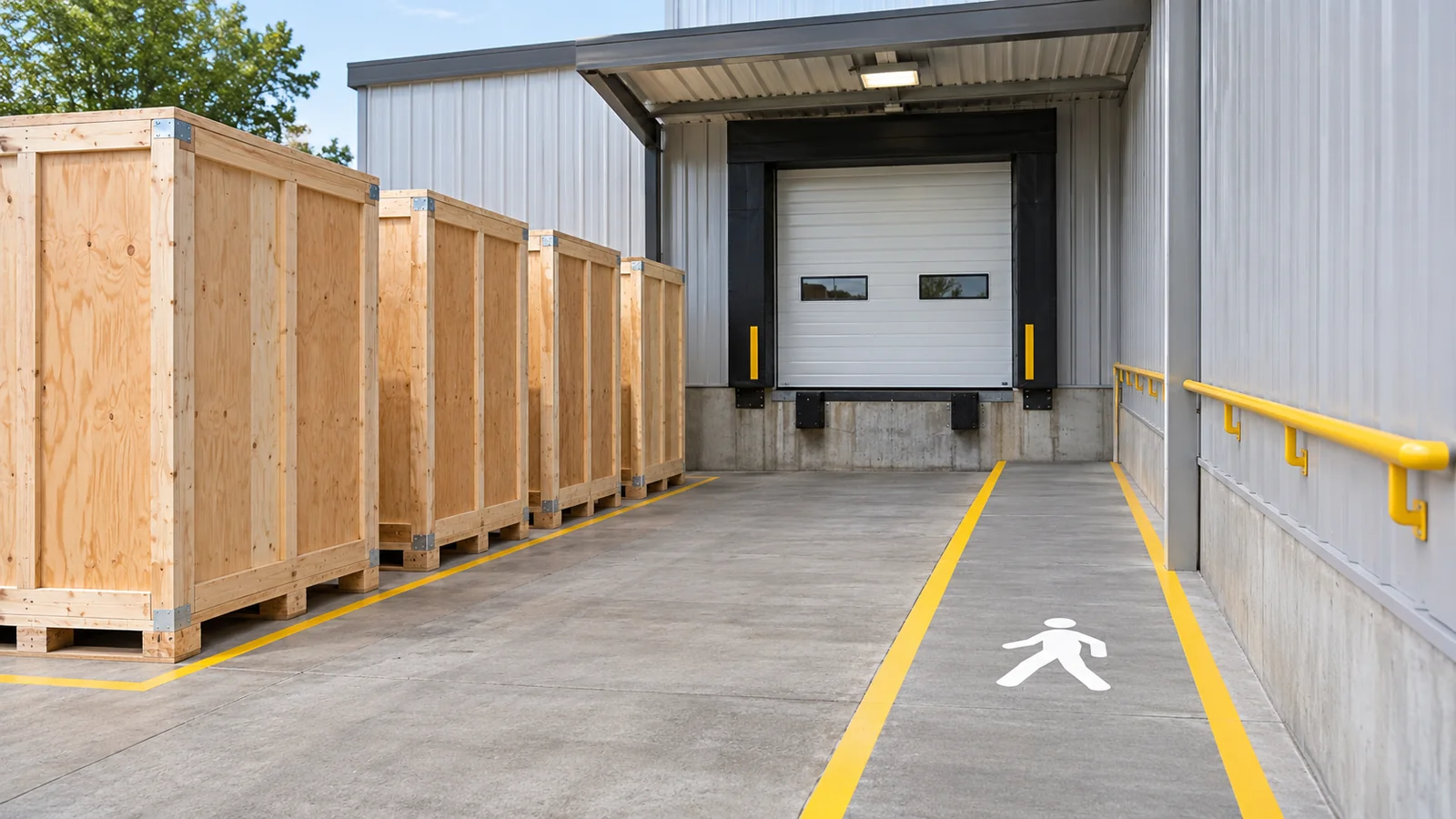
Confirm loading-dock availability, vehicle restrictions, access hours, security procedures, and requested documentation at each property. Describe ramps, lifts, doorways, yard conditions, and the route to relevant rooms or storage zones. Ask the mover how it will assess those conditions and what remains uncertain. Include shared sites and neighboring operations in the coordination where relevant.
Reserve the approved access and communicate changes promptly. If other suppliers or contractors use the same dock, establish a workable schedule. Do not assume that an empty-looking yard is available for staging or that a vehicle can remain indefinitely. Property rules and operational traffic need to fit the accepted moving plan before the first load is dispatched.
Decide how the business keeps trading
Identify essential products, tools, records, and equipment that must remain available during the transition. Set aside a managed working supply where appropriate. Decide which orders or services can continue and which need a planned pause. Communicate those decisions internally so sales and customer-service teams do not promise availability the moving sequence cannot support.
If you phase the move, define the purpose of each load and the point at which the destination can receive or use it. Avoid scattering the components of one essential process across several uncontrolled shipments. A practical plan preserves the business function, whether that requires specific tools traveling together or a defined period without certain stock.
Give each load a clear identity
Use identifiers that connect cartons, pallets, crates, or individual assets with the inventory and destination zones. Ask the mover which recording system it uses and how it will connect with your receipt process. Keep sensitive commercial information in controlled records rather than exposing more than necessary on external labels.
Agree on how exceptions are recorded: an item not ready, a changed quantity, damaged packaging, or goods held back at the origin. Update the release record instead of letting a load leave with undocumented differences. Our loading and unloading guide explains the practical boundaries of handling services, particularly when transport and labor come from separate providers.
Keep technical and information tasks separate
Have authorized staff manage data-bearing equipment, network systems, access controls, and confidential records. Decide how they will be prepared and transferred under the business's own procedures. A moving crew should not be given passwords or expected to restore technical systems simply because it handles the physical equipment. Identify which checks must happen before normal operations resume.
Record the handoff between movers and technical staff. Keep required accessories, manuals, and components linked with the relevant asset. If installation depends on another contractor, confirm the receiving conditions and appointment. Our appliance moving guide offers a useful distinction between transport and technical setup, although commercial equipment may require a more specialized assessment.
Compare complete proposals
Give prospective providers the same inventory, service scope, access information, and business sequence. Ask which preparation, materials, loading, transport, placement, assembly, and collection tasks are included. Identify waiting, phased deliveries, and specialist work separately where relevant. An estimate based on an ordinary office cannot be compared fairly with a proposal assessing stock and equipment.
Use our moving costs and quotes guide to keep categories visible. Agree who can authorize a change and how revisions are documented. If the business adds a site, changes the phase order, or alters stock quantities materially, ask the provider to reassess. Keep each accepted estimate with the inventory and conditions that support it.
Prepare a receiving and reconciliation process
Have trained business contacts ready to receive each load with the current inventory and layout. Check identifiers, quantities where required, visible condition, and destination placement through the agreed process. Keep exceptions specific and assign someone to resolve them. Do not mark an entire operational area complete merely because the vehicle has been emptied.
Separate physical receipt from readiness for use. Equipment may still require installation or testing, stock may need reconciliation, and records may need controlled placement. Decide who approves each area for operation and which outstanding tasks remain. That distinction helps the business avoid restarting a process whose critical components have arrived but are not yet ready.
## Test one order through the transition
Choose a representative customer order or service job and trace what it needs before, during, and after the relocation. Identify stock, tools, records, packaging, equipment, and staff access. Check where each resource will be at the point the business intends to fulfill that work. This can reveal an operational gap that an inventory count alone will not show.
For example, stock may reach the new site before the equipment used to prepare it, or tools may remain at the old premises after the team responsible for them has moved. The physical transport plan can be complete while the working process remains broken. Adjust the sequence or the promised availability through the appropriate business decision-maker rather than expecting the mover to solve the conflict.
Repeat the exercise for an exception such as a return, urgent repair, or supplier delivery. Decide which address and contact should be used during the transition and how goods entering either location will be recorded. Keep this temporary process simple and communicate it to the teams that use it.
When the move is complete, close the temporary arrangements deliberately. Update receiving instructions, reconcile goods held aside, and confirm that staff use the current stock locations and operating records. Retain the relevant release and receipt documents with the project file. This helps the business finish the move without leaving a second, informal inventory in a corner or at the previous premises.
Ask the relevant team to confirm when the temporary process ends and the normal operating process resumes. That final handoff should include any unresolved inventory differences, outstanding deliveries, and goods awaiting another approved decision about their ownership or destination.
Close the move by business function
Review essential workflows, remaining inventory differences, temporary storage, empty materials, and any outstanding contractor work. Keep final documents and receipts together. If a concern arises, follow the relevant provider's reporting process with the supporting records. Assign an owner and date to every remaining task so the move does not end with an unmanaged list of loose ends.
Commercial movers support the transition when the business supplies clear asset information and operational priorities. Define ownership, assess specialist goods, coordinate site access, and make each load traceable to its destination. Then verify readiness through the teams responsible for using the goods. The result is a relocation sequence connected to how the business actually works, rather than transport completed without an operating plan.