A car moving service needs a clear handoff at collection and another at delivery. The booking establishes the route and service terms; preparation makes the actual vehicle available under those terms. Start with the provider's current instructions and the condition of your car. Do not rely on a checklist intended for a different transport method or vehicle.
This guide follows the practical work after you have chosen a commercial transporter or broker arrangement. If you are still comparing providers, read our car shipping company guide first. Here, the focus is on preparing records, contacts, access, and the vehicle itself so the people at both ends can complete the agreed handoff without guessing.
Gather the accepted instructions
Keep the booking confirmation, vehicle description, collection and delivery terms, contact details, and preparation guidance together. Check that the documents identify the correct car and route. If the provider sends an update, mark which version is current. A folder full of conflicting instructions is less useful than a short set of records you can find during the appointment.
Ask about any instruction you do not understand before collection day. If you spoke to one business but another will transport the car, confirm where operational questions should go. FMCSA's automobile transporter advisory distinguishes brokers arranging transport from carriers performing it. Knowing those roles helps you direct a preparation or scheduling question to the appropriate contact.
Confirm who will release and receive the car
Choose a releasing contact who can attend the appointment, provide the agreed keys, and discuss the condition record. Choose a receiving contact who can do the same at destination. Ask the provider what authorization is required if either person is not the vehicle owner. Do not wait until a driver arrives to discover that the planned representative cannot complete the handoff.
Give those contacts the relevant booking details and limits of their role. Explain how to reach you if a decision needs approval. If someone will be traveling, identify periods when they may be unavailable and provide an agreed backup. Keep private financial or personal information limited to those who need it rather than forwarding every document indiscriminately.
Recheck the access arrangement
Confirm the actual collection location and how the provider will assess access. Tell it about gates, narrow roads, parking restrictions, steep approaches, or other known limitations. If an alternative meeting location is proposed, agree on it in advance where possible. Include the practical arrangements for reaching that location and leaving after the car has been released.
Repeat the same check at destination. A delivery address may be correct even when a large transport vehicle cannot use the street or property as expected. Ask who will contact whom about an access change and how it affects the appointment. Our long-distance moving guide explains how receiving arrangements interact with personal travel and the wider household move.
Make the car's condition easy to document
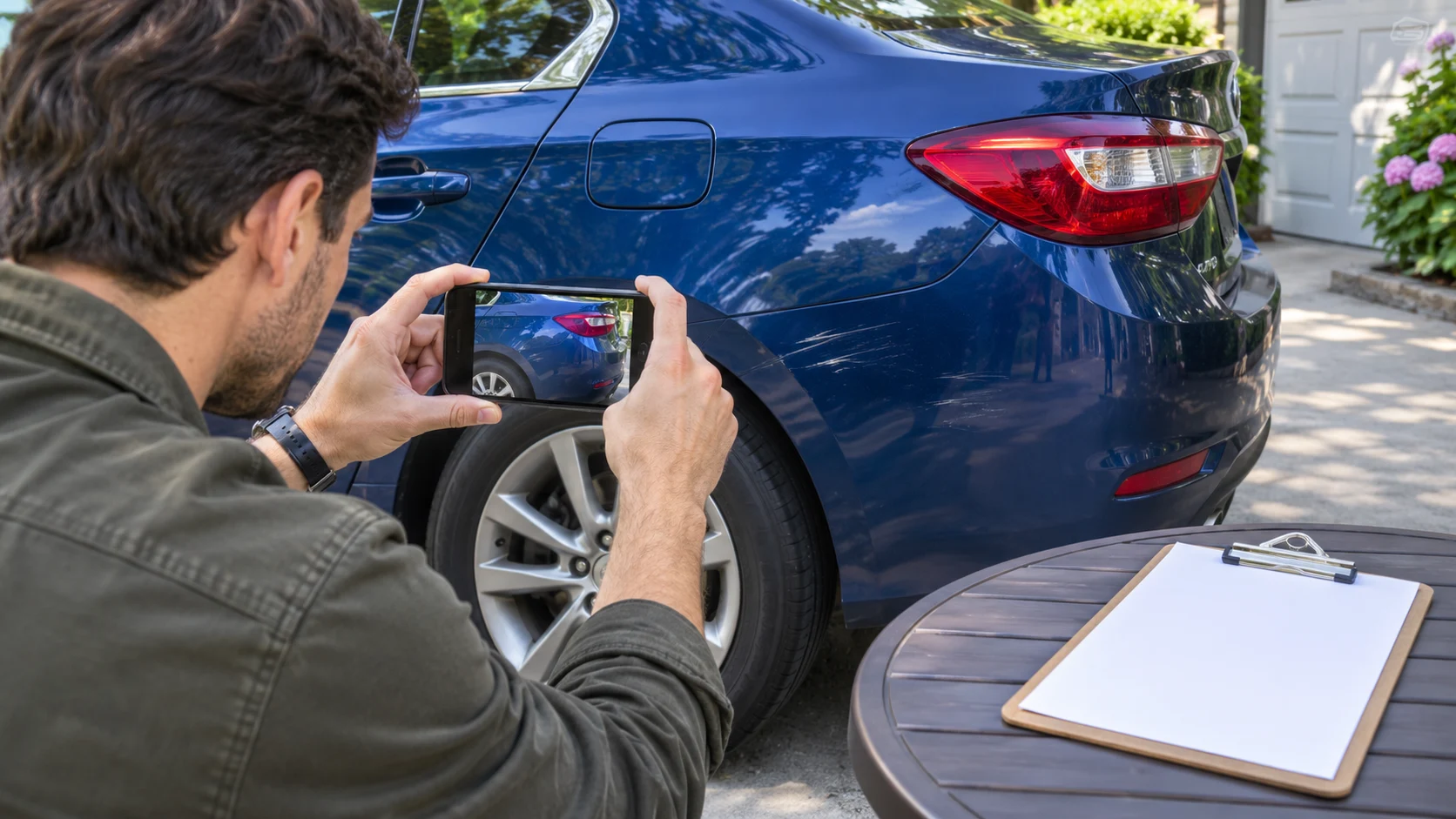
Prepare the exterior so existing marks can be seen during the agreed inspection, following the provider's instructions. Take clear photographs of the vehicle from several angles and of any existing damage. Include details that are relevant to the condition discussion without unnecessarily recording private documents or personal belongings. Keep the photographs accessible outside the vehicle.
Do not treat your photographs as a substitute for the provider's condition record. Ask how that record is completed, who signs it, and how you obtain a copy. Review specific observations together before release. If an entry does not reflect what you see, ask for clarification through the provider's process instead of assuming a private note will automatically resolve the difference later.
Report mechanical and handling issues
Tell the provider about any condition that affects operation, loading, steering, braking, clearance, or access. Use accurate information rather than guessing that a problem is minor. If the car's condition changes after booking, report it promptly. The accepted service method may depend on facts that were correct during the estimate but are no longer true.
Ask a qualified technician or the manufacturer about preparation questions outside your knowledge. This guide does not supply mechanical instructions or a universal procedure for every vehicle. A transport booking should not become an improvised repair appointment at the roadside. Resolve known concerns before collection and ask the provider whether the revised condition changes its acceptance or terms.
Follow instructions about fuel and power
Ask the carrier for its requirements concerning fuel level, electric-vehicle charge, alarms, and other operational details. Follow the instructions that apply to your vehicle and service. Do not use a generic percentage found in an unrelated article as if it were the provider's requirement. If a direction conflicts with manufacturer guidance, ask the appropriate parties to resolve the issue before release.
Keep any necessary operating instructions concise and specific. Explain a feature that the authorized handler needs to know without disclosing unnecessary personal information. If the vehicle has a special starting procedure or documented limitation, make sure the provider accepts it. The goal is an understood handoff, not a last-minute demonstration of a problem that was omitted from the booking.
Remove or address personal belongings
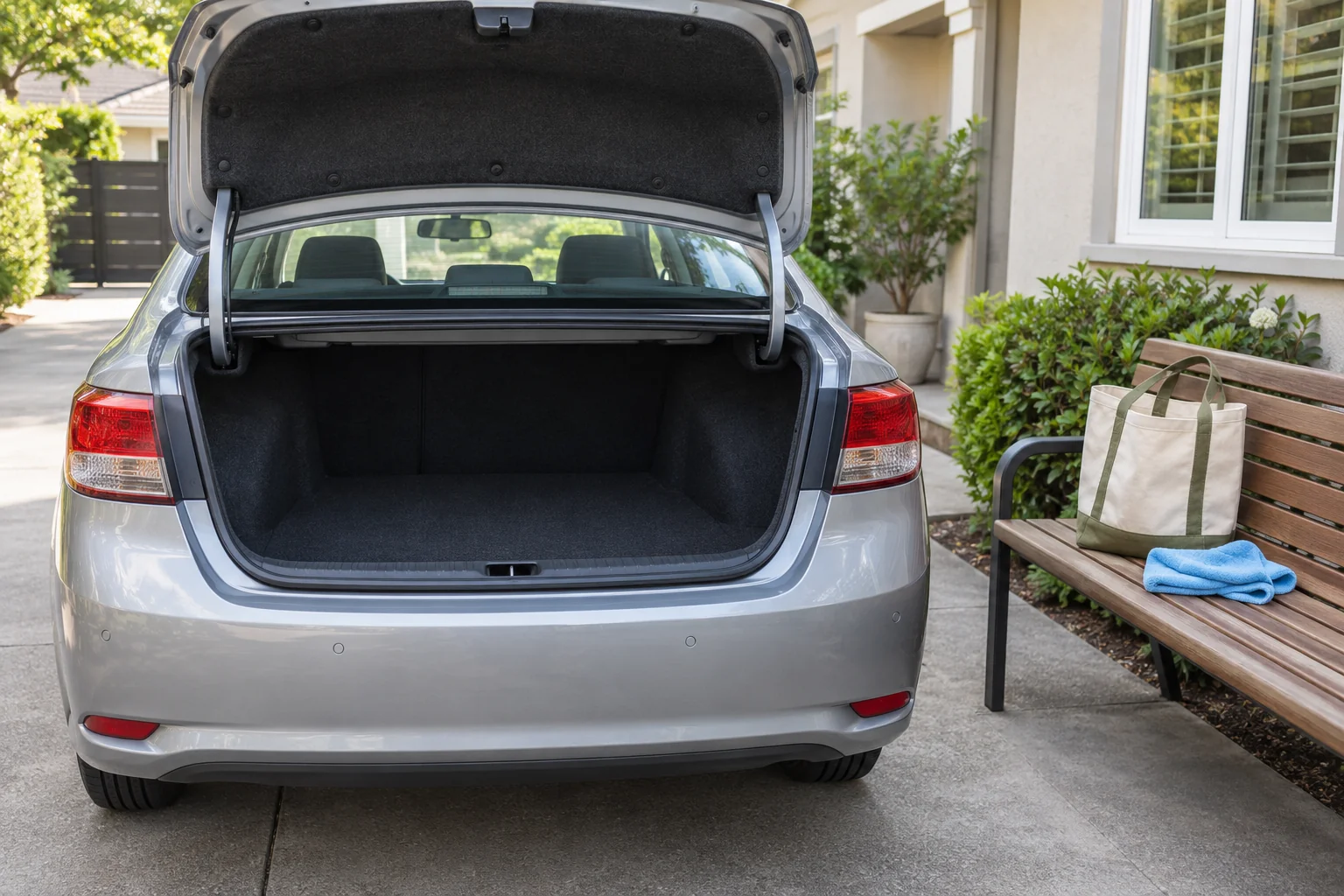
Request the provider's policy on contents inside the vehicle and follow it. Do not assume the car can carry household cartons because the trunk is available. Ask about accessories, loose equipment, and items normally kept in storage compartments. If a particular item is permitted, understand any conditions rather than treating a general answer as permission for unlimited contents.
Keep identification, keys you still need, essential medication, valuables, and private records with you. Our packing services guide explains how to separate travel essentials from a household shipment. Apply the same principle to the car: you should not need to retrieve an essential object after the transporter has accepted the vehicle and begun its route.
Review exterior accessories and modifications
Identify racks, antennas, added body components, and modifications that affect dimensions, clearance, or handling. Ask the provider which items must be removed or secured and who should perform that preparation. Do not attempt a technical adjustment beyond your competence simply to meet a collection window. Use the manufacturer or a qualified professional when the task requires it.
Document any component removed for transport and decide how it will reach the destination. Keep fasteners and instructions identified if relevant. If the vehicle no longer matches the dimensions or condition described at booking, send an update. A provider's assessment should reflect the actual car and accessories that will be presented, not the configuration it had when the initial request was made.
Prepare keys and access securely
Ask which keys or authorized access devices the carrier needs and how they should be handed over. Keep your remaining keys and access to the destination home separate. Avoid attaching unrelated household keys or documents that do not belong with the car. Record the agreed handoff so the releasing contact knows exactly what to provide.
Discuss alarms, access codes, or electronic features only through an appropriate agreed channel. Do not publish sensitive details on labels or in photographs shared broadly. If a device or app requires owner action at collection, arrange to be available or confirm an accepted alternative. The transporter should have the access necessary for its role without receiving control of unrelated accounts or private information.
Arrange your own transport after release
Plan how you will leave the collection location once the car is handed over. Include anyone traveling with you and any belongings you will carry. If pickup uses a time range, avoid scheduling another appointment so tightly that a routine update leaves you stranded. Ask which notifications to expect and keep the provider's contact details available.
Plan the period before delivery as well. You may need another way to commute, shop, or reach temporary accommodation. Our moving costs and quotes guide helps keep those personal expenses separate from the vehicle transport agreement. A car shipping total does not describe every cost of being without your own vehicle during relocation.
Complete collection deliberately
Be ready to identify the agreed provider or contact under the booking process. Walk through the condition record and confirm the relevant documents before release. Keep a copy of the records you are given. Ask questions about differences while the details are visible rather than relying on memory after the vehicle has departed.
Confirm the receiving contact, destination, and update channel. Do not assume the driver has every detail from an earlier conversation with a broker or representative. Keep communication concise and relevant to the agreed service. If there is a material discrepancy, contact the appropriate business through the process established during booking before allowing an assumption to become the working plan.
Stay reachable during the transport period
Use the agreed contact method for updates and report a changed destination or receiving arrangement promptly. Tell the provider if travel will make you temporarily unreachable. Keep one current version of the delivery instructions so different contacts do not supply conflicting addresses or appointment details. If a revision affects cost or service, ask for written confirmation under the agreement.
Avoid treating silence as confirmation of a delivery time you hoped for. Refer to the actual timing terms and request an update through the stated channel when needed. If the car shipment is part of a wider household transition, coordinate changes with the people receiving furniture or managing access. Our relocation services guide explains how to keep those separate handoffs aligned.
Prepare to inspect at delivery
Arrange for the receiving contact to have enough time and a suitable opportunity to review the vehicle and records. Keep the collection condition record and your photographs accessible. Ask the provider how delivery observations should be documented and how to report a concern. Do not assume every service uses the same form or reporting process.
Check the vehicle's visible condition and the agreed handover items. If something concerns you, describe it specifically and follow the provider's stated procedure. Keep relevant photographs and correspondence together. For a mechanical or technical concern, use an appropriately qualified professional rather than expecting an ordinary delivery inspection to diagnose every internal system.
## Give the receiving contact a useful reference
Prepare a short delivery reference containing the vehicle description, provider contact, accepted destination, current appointment information, and the location of the collection condition record. Explain which documents the receiver should retain and how to contact you if a question needs approval. Keep the reference current instead of forwarding a long message history with several outdated arrangements.
If the receiver did not attend collection, show them the relevant condition photographs in advance. Identify existing marks without asking them to diagnose technical issues. Their role should match the authority and process agreed with the provider. If they cannot remain for the full appointment, arrange an accepted alternative before delivery rather than assuming a signature can be completed later.
Keep personal travel and the receiving appointment separate enough to remain workable. If a flight or work commitment makes you unreachable, provide the agreed backup contact and explain the limits of that person's role. The delivery handoff should not depend on one unanswered call while everyone waits beside the vehicle.
After receipt, ask the contact to send you the completed records and any specific observations promptly so the moving file remains complete. Retain the current reference until any remaining questions about the delivery and agreed handover have been resolved.
Close the record after the handoff
Retain the booking, payment records, condition documents, and correspondence until outstanding questions are resolved. Confirm that any separately transported accessories have arrived and that your keys and access arrangements are complete. If you made temporary transport arrangements, update or end them according to their own terms rather than leaving another booking active unnecessarily.
A well-prepared car move gives the releasing contact, carrier, and receiving contact the same usable information. Follow the accepted instructions, document condition, report changes, and keep essentials outside the vehicle. Those steps support the service you purchased and make it easier to explain the actual facts if a question arises between collection and delivery.