Appliance movers should know the make, model, condition, access route, and preparation status before accepting a booking. A refrigerator, washing machine, range, and dishwasher involve different transport and installation questions. Start by identifying the actual appliance and deciding who will handle each stage. Moving it between addresses is only one part of returning it to usable service.
This guide explains how to coordinate preparation, collection, transport, delivery, and qualified installation. It does not provide gas, electrical, plumbing, or lifting instructions. The appropriate manufacturer guidance and qualified providers should determine the technical work. A clear division of responsibilities helps prevent a crew from arriving to an appliance that remains connected or a destination that cannot accept it.
Confirm what is actually moving
List the appliances included in the move and check that you have authority to remove them. If a property sale or rental agreement affects which appliances remain, resolve that with the relevant parties before booking. Do not ask the crew to decide ownership or contractual questions on collection day. The accepted inventory should contain items you are entitled and prepared to release.
Record the make, model, dimensions, and available instructions for each appliance. Photograph identifying labels only where they can be reached safely without moving equipment. Explain modifications, missing parts, known leaks, or functional concerns. If the model or specifications remain uncertain, tell the provider and ask what information it needs rather than assuming a similar appliance has identical requirements.
Read the model-specific preparation guidance
Locate the maker's instructions for moving and installing the actual appliance. Ask the provider or appropriate technician to review relevant requirements before scheduling. Different models can require different preparation, components, orientation, and setup. Avoid applying a remembered rule from a previous refrigerator or washing machine without checking whether it applies to the equipment being moved now.
Whirlpool's front-load washer moving guidance explains the role of shipping bolts for the models covered by that guidance. Use that as a reason to verify your own maker's instructions, not as a universal procedure for every washer. Tell the technician or mover if any required transport parts are missing so the issue can be resolved before collection.
Separate technical preparation from transport
Ask who disconnects, prepares, transports, reconnects, and tests each appliance. Some moving services accept transport but do not perform technical installation. Confirm the boundary in writing. Gas connections, hardwired electrical equipment, water connections, and other systems may need appropriately qualified professionals and project-specific permissions. Identify the right provider before assuming those tasks belong to the moving crew.
Create a sequence with the preparation appointment before collection and the installation appointment after delivery, as appropriate to the equipment. Ask each provider what it needs from the previous stage. If preparation is delayed, tell the mover promptly. A booked truck does not make an unprepared appliance ready or transfer a technician's responsibilities to the transport team.
Assess collection access before the date is fixed
Document the route from the appliance's location to the approved vehicle position. Include doorways, thresholds, turns, stairs, lifts, narrow utility rooms, and shared passages. Provide photographs in sequence and the measurements requested by the provider. Remember that a visible front opening may not show restrictions behind or beside a fitted appliance.
Ask whether an in-person assessment is required. Do not pull out an appliance to make a label or connection visible if doing so could damage it or its services. Let the appropriate professional assess access to the installation. Our specialty moving guide explains how technical preparation and handling assessments fit together for unusual or heavy household items.
Confirm the destination can accept the appliance
Measure the intended space and discuss connections, ventilation, clearances, and installation requirements with the maker or qualified installer. The appliance's width alone does not establish that it can be installed correctly. A space that held another model may not satisfy the instructions for this one. Resolve suitability before committing to a move that ends with unusable equipment.
Document the route from unloading to the intended location. Tell the provider about steps, lifts, gates, parking restrictions, and any ongoing building work. If the destination is unavailable to inspect, identify the unresolved conditions. Do not turn assumed access into a confirmed delivery method without the provider's assessment and the receiving property's approval where needed.
Plan refrigerator and freezer preparation
Use the manufacturer's guidance and the appropriate technician's advice to plan cleaning, drying, contents removal, and preparation for transport. Decide what happens to food before the appliance becomes unavailable. Do not assume the household moving service accepts perishable goods or can maintain a particular storage temperature. Keep the food plan separate from the transport booking.
Ask how doors, internal parts, water connections, and accessories will be handled for your model. Keep required components identified and follow the accepted professional preparation plan. Avoid relying on a universal instruction about transport orientation or restart time. Ask the maker or qualified installer what the actual appliance requires before it is connected and used at the destination.
Plan washing machine preparation
Explain whether the machine is freestanding, built in, stacked, or connected through another arrangement. Tell the provider about any platform, tight enclosure, or difficult access. Ask the qualified technician to identify the required preparation and transport components for that model. A household mover should know whether the agreed preparation has been completed before collection begins.
Keep any model-specific parts and instructions with the relocation records, and decide who will remove or reinstall transport components where applicable. Record that responsibility rather than leaving a packet of unidentified hardware on the appliance. At the destination, have the qualified installer follow the maker's setup requirements and explain the relevant checks before normal use.
Plan ranges, dishwashers, and fitted equipment
Identify the appliance's installation type and connection arrangement through appropriate records or a qualified assessment. Ask who handles removal from cabinetry, service disconnection, preparation, and destination fitting. Do not assume a transport booking includes alterations to cupboards, worktops, wiring, pipework, or ventilation. Those are separate questions for the competent providers responsible for the actual installation.
If the destination needs changes, complete and confirm the necessary work before delivery. Ask what happens if the space is not ready and where the appliance can be left under the accepted arrangement. Avoid an improvised placement that blocks access or exposes the equipment to unsuitable conditions. A realistic delivery plan should identify both the intended location and any agreed temporary alternative.
Keep accessories and parts identified
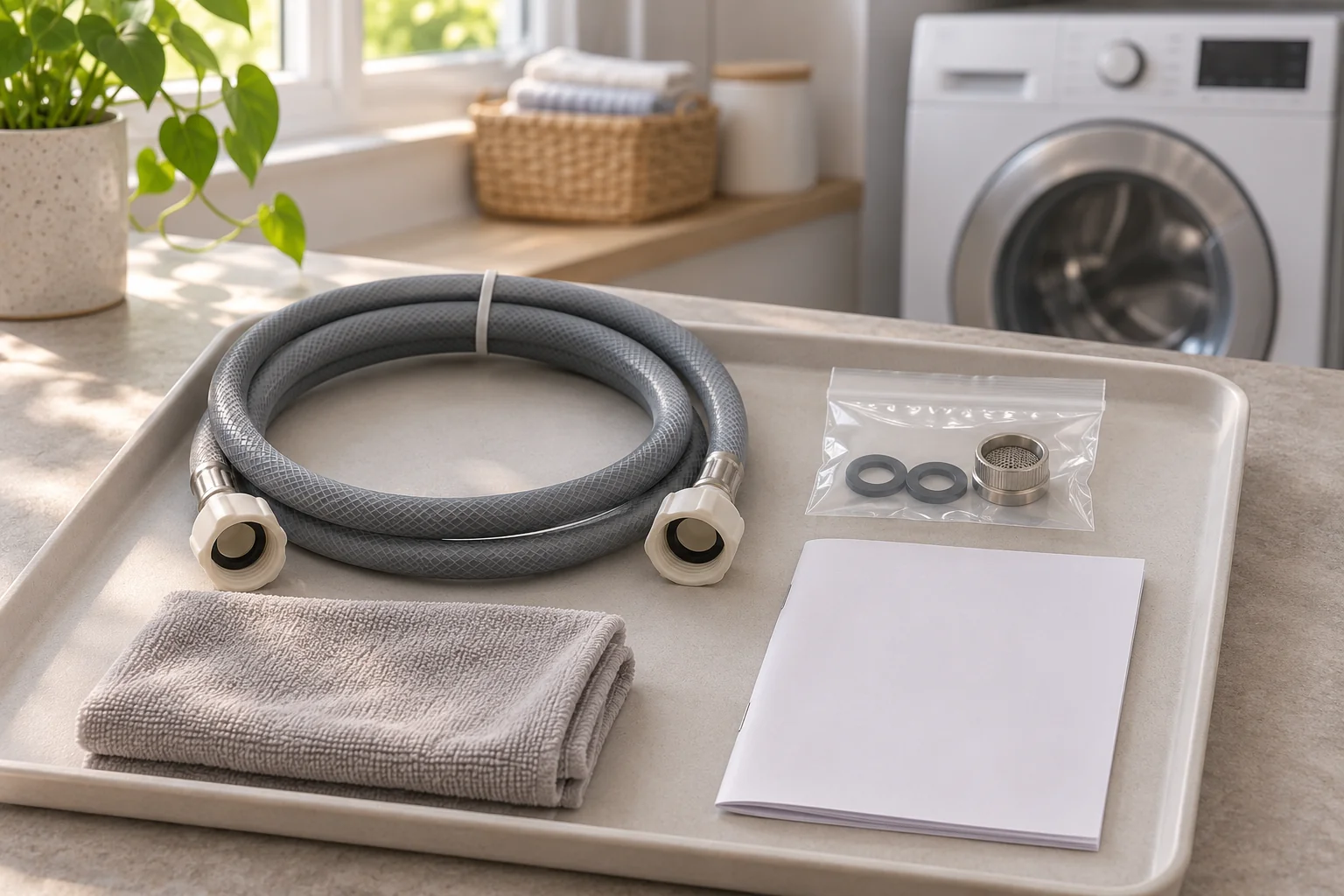
List shelves, trays, hoses, brackets, manuals, remote controls, and other components that belong with each appliance. Ask the provider which parts remain attached and which need separate preparation. Follow the maker's guidance and the accepted service method. Do not remove pieces merely because they appear detachable or apply tape directly to a finish without suitable advice.
Use a simple item-based inventory so components reach the correct appliance at delivery. Keep technical instructions accessible to the installer rather than inside an unrelated carton. Our packing services guide explains how to label household cartons consistently. Apply that system to accessory boxes while making clear which preparation tasks remain with the technician or mover.
Compare complete service proposals
Give each provider the same appliance details, access conditions, preparation status, and destination requirements. Ask which tasks are included and which need another appointment. A transport-only estimate should not be compared directly with a proposal including qualified preparation and installation. Keep each participating business and its charges visible in the household plan.
Our moving costs and quotes guide explains how to track included, separate, and unresolved costs. Ask how waiting, changed access, incomplete preparation, rescheduling, and added services are handled. Avoid presenting a generic appliance-moving price as a quote for your situation. The useful figure is the proposal based on the equipment and work you have actually described.
Coordinate with the rest of the move
Decide whether appliances travel with the main shipment or through a separate service. Tell the household mover about technical appointments and the rooms that must remain clear. If other furniture will block the appliance route, plan the sequence before loading or unloading. Several providers may need the same entrance, lift, or loading area, so one coordinator should manage the handoffs.
Use the local moving labor guide to assign general loading and household tasks. Keep appliance-specific preparation separate from those general duties. If an appointment changes, notify everyone whose work depends on it. A technician, mover, and receiving contact cannot coordinate effectively when each has a different version of the delivery date or readiness status.
Address storage before collection
If the destination may not be ready, ask the provider whether storage is accepted and what preparation and conditions apply. Check the manufacturer's relevant guidance with a qualified provider. Appliances should not be treated as suitable for any available storage space simply because they are empty. Ask how cleanliness, dryness, components, and redelivery are addressed within the accepted arrangement.
Our moving and storage guide explains general access and timing questions. Identify the business responsible for each handling stage and the notice required before final delivery. Keep model instructions and installation contacts accessible while the appliance is stored. A temporary holding stage should connect clearly to the plan for eventual installation rather than becoming an undefined pause.
Record condition and understand reporting
Photograph exterior condition and note known functional problems before the appliance leaves. Ask how the provider records its acceptance and what protection terms apply to the agreed work. If transport and installation involve different businesses, clarify the boundaries. A visible condition check by a mover is not necessarily a technical test of the appliance's internal systems.
Keep the agreed scope, preparation records, photographs, invoices, and correspondence together. Our guide to choosing movers explains general identity and communication checks that support this process. Ask how concerns should be reported and which records are needed. Do not assume a universal reporting deadline or reimbursement arrangement without reviewing the actual service terms.
## Create a receiving checklist for each appliance
Prepare a separate record for each model rather than one instruction covering all appliances. Include the intended location, accepted delivery service, accessory inventory, preparation status, and installation provider. Keep the maker's instructions accessible to the person doing the technical work. This helps prevent a washer's transport parts or a refrigerator's setup questions from being confused with another appliance.
If a substitute contact will receive delivery, explain which decisions they can make and when to call you. Confirm the provider's authorization requirements beforehand. The receiver should know whether the crew is placing the appliance only or also performing an agreed qualified installation.
If the destination is not ready, follow the alternative arrangement already accepted by the provider. Do not have the receiver choose an improvised temporary position that changes the route or storage conditions without review. Record what remains unfinished and who will complete it.
After the technical appointment, retain the completion information and any operating instructions supplied. Report a concern to the appropriate business using the model details and specific observations. A clear description supports the next assessment without assuming that transportation, installation, or an existing fault caused the issue. Keep any revised appointment information with that record so another household member can coordinate the remaining work without relying on a chain of incomplete messages.
Complete installation through the right provider
At delivery, confirm the agreed placement and inspect visible condition with the responsible contact. Have the appropriate qualified installer complete connection and setup under the maker's instructions and applicable requirements. Ask who performs the final checks and what the household needs to know before normal use. Delivery to the room does not itself establish readiness to operate.
Retain manuals, preparation details, and completion records for future service. A well-organized appliance move gives each stage an owner: identify, prepare, collect, transport, place, install, and check. Begin with the actual model and both access routes, then coordinate technical work around the moving booking. That approach turns a vague request to move appliances into a service plan the participating providers can assess and complete.